


This article offers creative toddler room ideas that combine safety, style, and practicality. It covers essential safety tips, fun decor inspirations, and adaptable design solutions to create an inviting space that supports your child’s growth, whether you’re doing a full makeover or making small, gradual updates.


The transition from nursery to toddler room marks an exciting milestone in your little guy’s development. As your child grows from baby to an independent explorer, their space needs to evolve too. Creating a toddler room that balances safety, functionality, and style can feel overwhelming, but with the right approach, you can design a space that supports your child’s development while reflecting their emerging personality.
This comprehensive guide will walk you through everything you need to know about designing the perfect toddler room. From essential safety considerations to creative decor ideas, we’ll explore practical solutions that make both kids and parents happy. Whether you’re planning a complete room transformation or making gradual updates, these toddler room ideas will help you create an inviting space that grows with your child.
Essential Toddler Room Setup Basics
The foundation of any successful toddler room lies in choosing the right furniture and layout. This transition typically happens between 18-24 months when children start climbing out of their cot or show signs of readiness for more independence.
Start with the Right Bed
The centerpiece of your toddler room should be a floor bed or low toddler bed. This Montessori-inspired approach eliminates the risk of dangerous falls while giving your child the freedom to get in and out of bed independently. Floor beds support your toddler’s natural development and make bedtime routines more manageable for everyone involved.
When selecting bedding, choose washable, durable materials that can withstand frequent washing. Cotton is an excellent choice for both comfort and practicality, while patterns and colours can add personality to the space.
Essential Furniture for Independence
Your toddler room should include furniture that promotes independence and supports daily activities:
- Toddler-sized table and chairs: Perfect for art projects, puzzles, and snack time
- Low dresser: Allows toddlers to participate in getting dressed and putting away clothes
- Accessible bookshelf: Encourages independent reading and book selection
All furniture must have rounded corners to prevent injuries during active play. More importantly, secure all tall furniture and heavy items to walls using anti-tip brackets – this simple step can prevent serious accidents, as furniture tip-overs send over 25,500 children under 5 to emergency rooms annually.
Design for Supervision and Flow
Create open sightlines throughout the room so you can easily supervise your toddler during play. Arrange furniture to create clear pathways that allow your child to move freely without obstacles. This layout supports their natural curiosity while keeping them safe as they explore their environment.

Image Credit: Wind and Willow Home
Storage Solutions for Toddler Rooms
Smart storage is crucial for maintaining an organized, functional toddler room. The key is making everything accessible at your child’s level while keeping the space tidy and safe.
Low and Accessible Organisation
Install cubbies and bins at toddler height to encourage independent clean-up. When children can easily reach their toys and put them away, you’re teaching valuable organisational skills while reducing daily battles over tidying up.
Use labeled storage baskets with both pictures and words. This approach supports early literacy development while making it easy for toddlers to find and return items to their proper places. Canvas or soft material bins are safer than hard containers and easier for small hands to handle.
Clothing and Daily Items
Add hooks near the door at your toddler’s height (around 36-42 inches from the floor) for jackets, backpacks, and daily items. This simple addition helps children develop independence and responsibility for their belongings.
Consider installing a low clothing rod in the closet or a section of the dresser where your toddler can hang their own clothes. This practical addition makes getting dressed more engaging and builds confidence.
Books and Special Items
Open shelving for books should be positioned at or below your child’s eye level to encourage reading habits. Display books with covers facing forward on shallow shelves – this presentation significantly increases the likelihood that children will engage with reading materials.
Use floating wall shelves to display special toys and keepsakes safely out of reach. This protects fragile items while still allowing your child to see and appreciate their treasures.
For seasonal items or extra linens, under-bed storage drawers maximise space efficiency while keeping less frequently used items organised and accessible to parents.
Colour Schemes and Themes That Work
The colours and themes you choose for your toddler room can significantly impact your child’s mood, sleep quality, and overall well-being. Current research in colour psychology provides valuable guidance for creating spaces that support healthy development.

Image Credit: Jennifer B Meyer
Calming and Nature-Inspired Themes
Mint green paired with dinosaur or nature accents creates a perfect balance of tranquility and curiosity. This combination has been shown to reduce anxiety while stimulating interest in the natural world. Add texture through natural materials like woven baskets or wooden toys to enhance the sensory experience.
For a more sophisticated approach, consider a mauve and moody bohemian space with varied textures and artistic elements. Layer different fabrics, add hanging plants (safely out of reach), and incorporate handmade elements that create visual interest without overwhelming young senses.
Bright and Energetic Options
Pretty pink rooms with floral patterns and soft fabrics appeal to many children and can create a dreamy, imaginative atmosphere. Balance bold colours with neutral elements to prevent overstimulation, especially in sleeping areas.
Retro themes featuring orange, yellow, and brown tones inspired by 1970s aesthetics are making a comeback. These warm colours can energise creative play while maintaining a cosy feeling that supports both active play and quiet time.
Modern and Versatile Approaches
Monochrome graphics with subtle superhero details offer a modern appeal that can easily evolve as your child’s interests change. This approach allows you to update details without completely redecorating, making it both practical and budget-friendly.
Fresh sporty themes incorporating team colours and basketball elements work well for active children. Use removable wall decals to display favourite teams or sports, allowing for easy updates as preferences change.
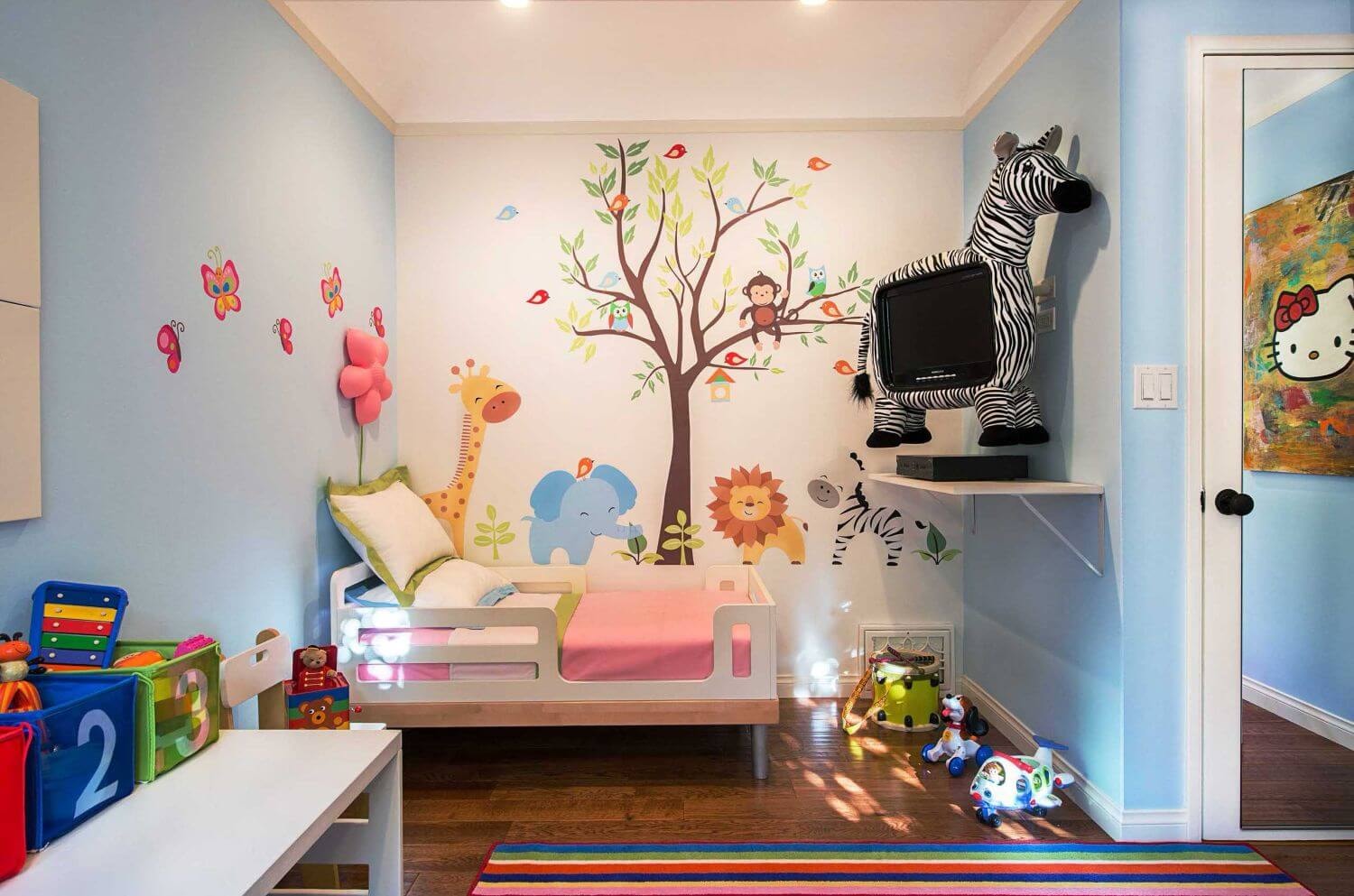
Image Credit: Fundi Interiors
Creating Functional Play Areas
A well-designed toddler room serves multiple purposes beyond sleep. Creating dedicated play areas supports different types of development while keeping activities organised and engaging.
Reading Nooks and Quiet Spaces
Design a cosy reading corner with oversized cushions or bean bags that invite relaxation and exploration. Position this area near natural light when possible, and add soft lighting with table lamps or string lights for evening reading sessions.
Stock the reading nook with a variety of books appropriate for your toddler’s developmental stage. Rotate books regularly to maintain interest and introduce new concepts and vocabulary.
Active Play Zones
Set up pretend play stations with toy kitchens, dress-up areas, or miniature workbenches. These spaces support imaginative play, which is crucial for social and emotional development during the toddler years.
Include building and construction zones with organised storage for blocks, Legos, and other building materials. These activities develop spatial reasoning, problem-solving skills, and fine motor coordination.
For homes with limited outdoor space or challenging weather, consider adding indoor swings or small climbing elements. These features support gross motor development and provide energy outlets when outdoor play isn’t possible.
Creative and Learning Spaces
Create dedicated art and craft corners with washable surfaces and organised supply storage. Use a small desk or table at the appropriate height, and ensure all materials are non-toxic and age-appropriate.
Designate quiet spaces for puzzles and activities that develop fine motor skills and concentration. Rotate these materials regularly to maintain challenge and interest as your child’s abilities develop.
Reading and Learning Zones
Position book displays at toddler eye level to encourage independent selection and engagement with reading materials. Create comfortable seating options like small armchairs or floor cushions that make reading time special and enjoyable.
Add soft lighting to reading areas using table lamps or string lights rather than harsh overhead lighting. This creates a cosy atmosphere that makes reading time feel special and helps establish positive associations with books.
Consider creating alphabet and number learning walls using removable decals. These educational elements can support early learning while serving as decorative features that grow with your child’s development.
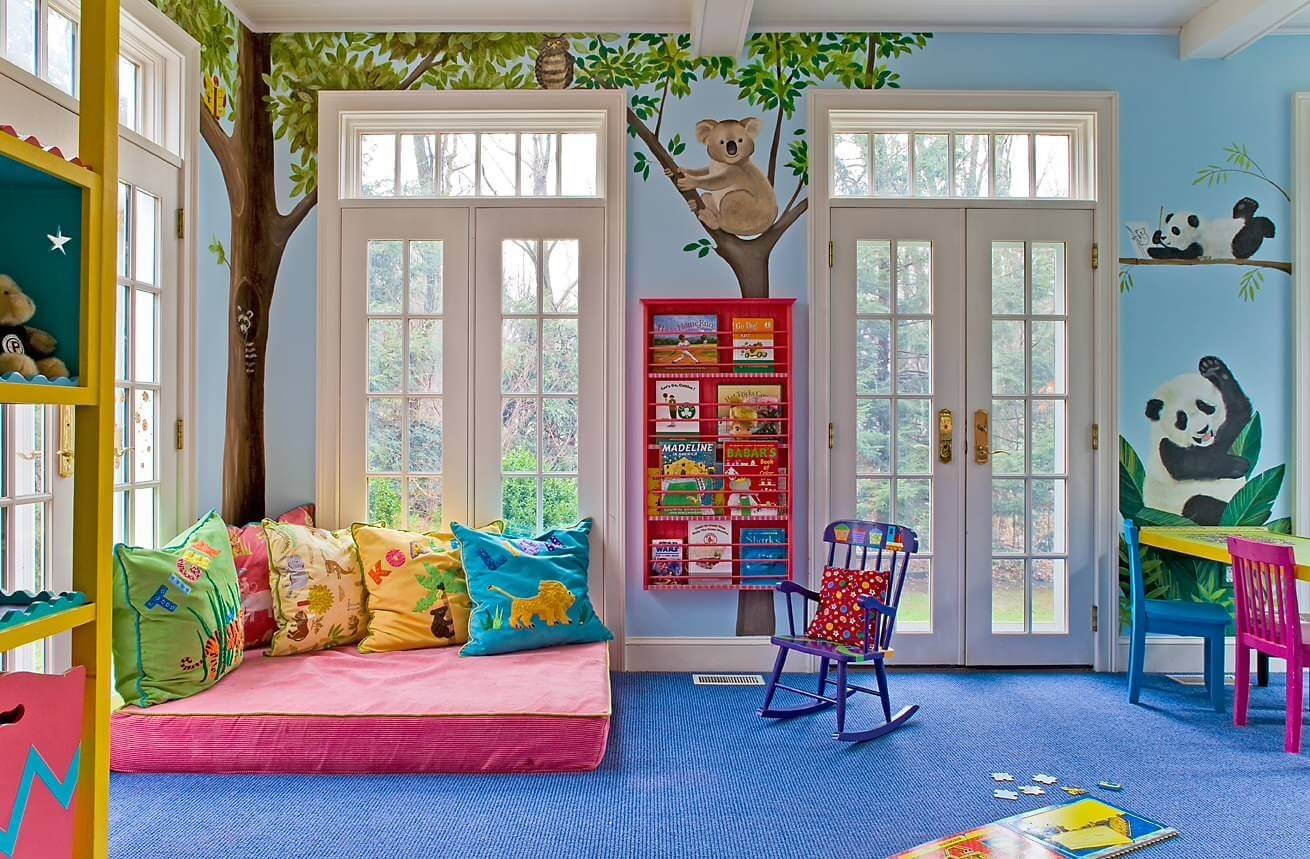
Image Credit: Houzz AU
Safety Considerations for Toddler Spaces
Safety must be the top priority when designing any toddler room. Young children are naturally curious and fearless, making thorough childproofing essential for preventing accidents and injuries.
Furniture and Structural Safety
Secure all tall furniture and heavy items to walls using appropriate anti-tip brackets. This includes dressers, bookcases, and any furniture that could potentially tip over if climbed on. Even furniture that seems stable can become dangerous when a toddler uses it as a climbing structure.
Cover all electrical outlets with safety plugs or sliding outlet covers. Secure loose cords away from reach, and consider using cord management systems to eliminate tripping hazards and prevent electrical accidents.
Choose cordless window treatments to eliminate strangulation risks. Traditional blind cords pose a serious safety threat to young children, so opt for cordless alternatives or install cord cleats well out of reach.
Materials and Finishes
Use only non-toxic paint and finishes throughout the room. Look for products labeled as low-VOC (volatile organic compounds) to ensure good indoor air quality. This is especially important in sleeping areas where children spend extended periods.
Install safety latches on drawers containing small items, art supplies, or any potentially dangerous materials. Even in a childproofed room, secure storage prevents access to inappropriate items.
Environmental Safety
Ensure adequate ventilation throughout the room to support healthy sleep and prevent mold or allergen buildup. Maintain clear access to windows for emergency egress, but install appropriate safety guards to prevent falls.
Keep radiators and heat sources unobstructed but protected with guards to prevent burns. Young children don’t understand the danger of hot surfaces, so physical barriers are essential.
Transitioning from Nursery to Toddler Room
The transition from nursery to toddler room should be gradual and considerate of your child’s emotional needs. This process typically begins around 18-24 months but can vary based on individual development and family circumstances.
Maintaining Comfort During Change
Keep some familiar nursery items while introducing new, age-appropriate furniture and features. favourite blankets, stuffed animals, or wall art can provide emotional continuity during this significant change.
Replace the crib with a floor bed or toddler bed as the centerpiece of the transformation. This change often marks the most significant shift in the room’s function and your child’s independence.
Adding Interactive Elements
Introduce more interactive furniture like activity tables, play kitchens, and accessible storage solutions. These additions support your toddler’s developing need for independent play and self-help skills.
Update wall decor to reflect your child’s growing interests and developmental stage. Removable decals make it easy to evolve the room’s appearance without major renovation or expense.
Supporting Development
Create more space for active play as motor skills develop rapidly during the toddler years. Remove or relocate furniture that was appropriate for a less mobile baby but might now pose obstacles to exploration and play.
Introduce clothing hooks and low storage that encourage independence in daily routines. These small changes support your child’s natural desire to do things for themselves while building confidence and life skills.
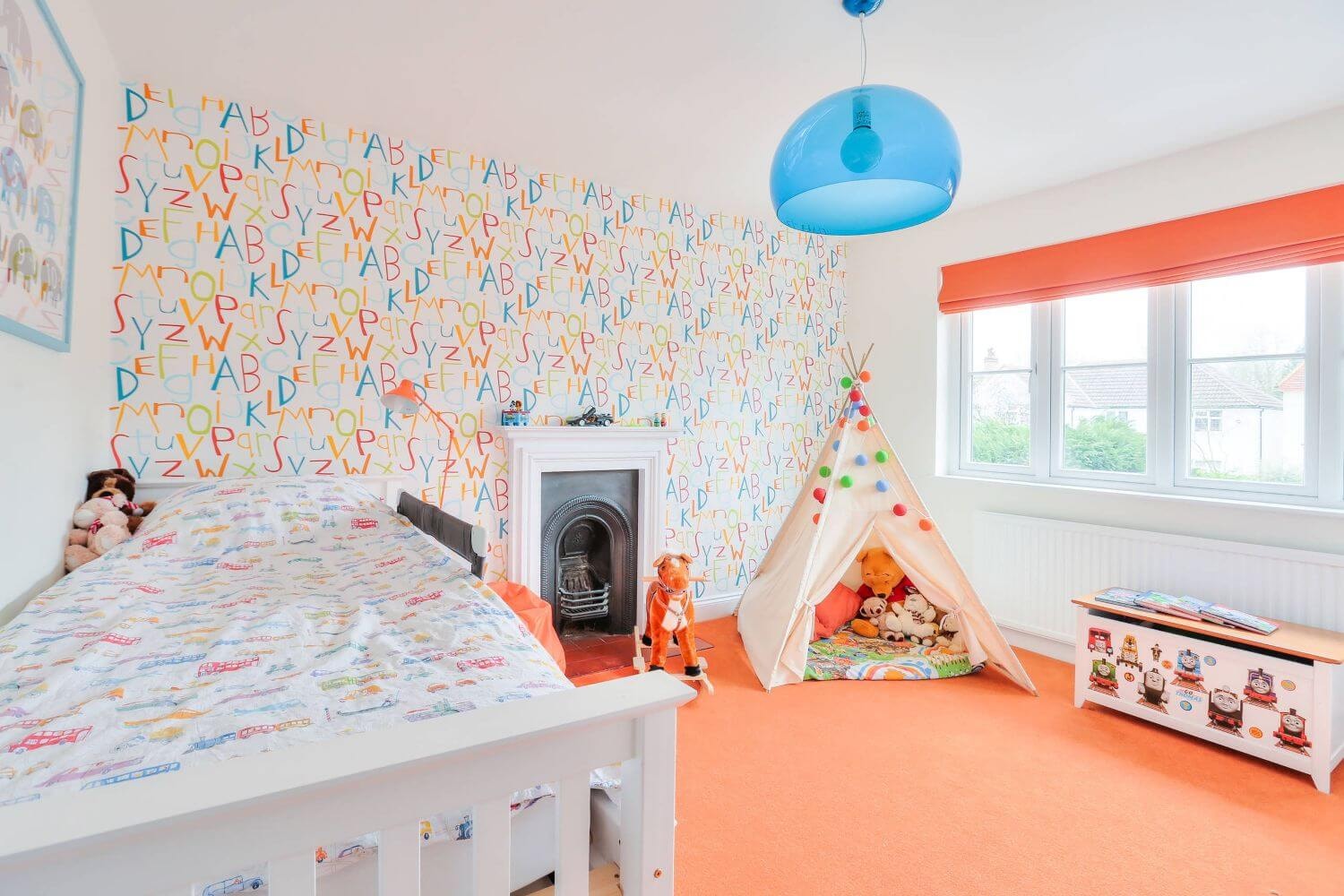
Image Credit: Houzz AU
Budget-Friendly Toddler Room Ideas
Creating a beautiful, functional toddler room doesn’t require a massive budget. With creativity and strategic planning, you can design a space that meets all your child’s needs while staying financially responsible.
Repurposing and DIY Solutions
Repurpose existing furniture with child-safe paint and new hardware. A fresh coat of non-toxic paint can completely transform a dresser or bookshelf, while new knobs or handles add updated style at minimal cost.
Create your own wall decals using removable adhesive vinyl or hand-painted designs. This approach allows for complete customisation while costing significantly less than professionally designed alternatives.
Shop second-hand for quality wooden furniture that can be refinished. Solid wood pieces often cost less used than new particleboard furniture, and they can be customised to match your exact vision and safety requirements.
Creative Storage Solutions
Use affordable bins and baskets from discount stores to create organised storage systems. Focus your investment on safety items like furniture anchors and outlet covers rather than expensive organisational systems.
Transform everyday items into storage solutions. Wooden crates can become book displays, while large baskets serve multiple purposes from toy storage to laundry hampers.
Personal Touches
Make your own artwork and decorations using your toddler’s handprints, paintings, and crafts. These personal touches cost almost nothing but create meaningful decor that celebrates your child’s creativity and development.
Create photo displays featuring your child’s adventures and milestones. Simple frames grouped together can create significant visual impact while celebrating your family’s unique story.
Involving Your Toddler in Room Design
Including your child in room design decisions supports their developing autonomy while ensuring the space truly reflects their preferences and personality.
Age-Appropriate Choices
Let toddlers choose between two options for elements like wall colours or bedding patterns. This approach gives them control while keeping decisions manageable for their developmental stage.
Allow them to help organise toys and books in their designated spaces. This involvement teaches organisational skills while giving them ownership of their environment.
Displaying Their Creativity
Include their artwork and creations as room decorations. Rotating displays keep the decor fresh while validating your child’s creative efforts and building self-esteem.
Create a special display area for their favourite stuffed animals, rocks, or other treasures. This dedicated space shows respect for their interests while keeping special items organised and safe.
Ongoing Involvement
Take photos of your child enjoying different room setups to gauge their preferences and document their development. These images can guide future changes while creating lasting memories.
Update room elements seasonally to maintain interest and engagement. Small changes like new throw pillows or rotated artwork keep the space feeling fresh without major expense or disruption.
Plan regular “room dates” where you and your toddler spend time together organising, decorating, or simply enjoying their space. These activities strengthen your relationship while maintaining the room’s functionality and appeal.

Image Credit: Four Walls and a Roof
Conclusion
Designing the perfect toddler room requires balancing safety, functionality, and creativity while supporting your child’s rapidly developing needs. From essential furniture choices to creative storage solutions, every element should contribute to a space that promotes independence, learning, and joy.
Remember that the best toddler room ideas are those that can adapt and grow with your child. Focus on creating a foundation of safety and accessibility, then add personality through colours, themes, and personal touches that reflect your little one’s unique interests and developmental stage.
Start with one area – perhaps the sleeping space or a reading nook – and gradually expand your vision as you observe how your child uses and enjoys their room. The most successful toddler rooms evolve over time, creating spaces that truly support your child’s journey from dependent baby to confident, independent explorer.
Your investment in creating a thoughtful, well-designed toddler room pays dividends in your child’s development, your family’s daily routines, and the countless memories you’ll create together in this special space.
If you enjoyed these ideas check out our article specifically on Toddler Boy Room Ideas


