


This article offers over 25 smart design ideas for teenage girls’ small bedrooms, focusing on maximising space without sacrificing style. It covers multifunctional furniture, strategic lighting, and creative layouts to create a cosy, organised, and personalised space that supports sleep, study, and socialising.


Creating the perfect teenage girl’s bedroom in a small space feels like solving a puzzle with constantly changing pieces. Your teen’s room needs to work harder than any other space in your home, serving as a bedroom, study area, social hub, and personal retreat all within limited square footage. The challenge becomes even more complex when you factor in a teenager’s evolving style preferences and growing need for independence.
Small rooms present unique opportunities for creative bedroom design. With the right approach, a compact space can feel more cosy than cramped, more organised than cluttered. The key lies in making every square inch count whilst still allowing your teen girl to express her personal style and create a space that truly feels like her own.
This comprehensive guide will walk you through proven strategies for maximising small spaces, from multi functional furniture solutions to strategic lighting that makes rooms feel larger. Whether you’re working with a 9×10 room or an even smaller space, these teenage girl bedroom ideas will help you create a beautiful, functional environment that grows with your teen through her important developmental years.
Space-Saving Furniture Solutions
The foundation of any successful small bedroom makeover starts with choosing furniture pieces that serve multiple purposes. Smart furniture selection can increase your usable floor space by up to 30% compared to traditional bedroom setups, making even the tiniest room feel more spacious and organised.
Choose beds with built-in storage drawers underneath to maximise floor space and organise belongings
A comfy bed with integrated storage drawers represents one of the most impactful investments for a teen’s room. Platform beds with built-in storage compartments underneath eliminate the need for separate storage furniture whilst providing ample storage for off-season clothing, extra bedding, and bulky items that teens tend to accumulate.
Under-bed rolling drawers and lift-top storage solutions make accessing stored items effortless whilst maintaining a clean, organised appearance. These storage drawers are particularly valuable for teens who need easy access to sports equipment, craft supplies, or seasonal wardrobes without sacrificing precious floor space.
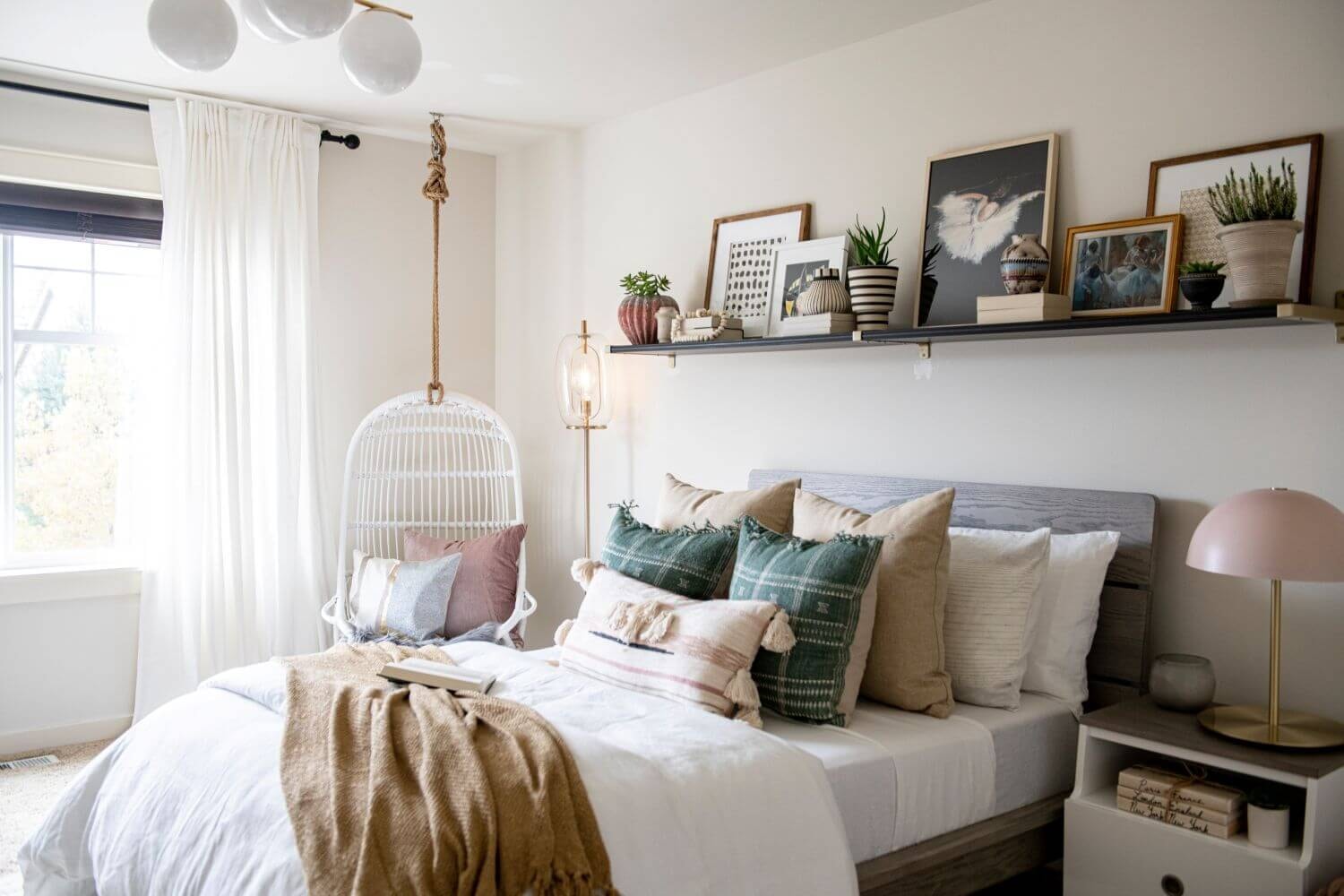
Image Credit: Ayesha Usman Design
Install wall-mounted desks that fold down to save space when not in use
Wall mounted desks revolutionise how small bedrooms function, reclaiming up to 12 square feet of floor area compared to traditional desk setups. These space-saving solutions fold flat against the wall when not needed, instantly transforming a study zone into open space for other activities.
A built in desk or fold-down option works particularly well in rooms where the desk isn’t used constantly throughout the day. This flexibility allows the one space to serve multiple purposes, adapting to your teen’s changing daily routine.
Use loft beds with study areas underneath for dual functionality in tight spaces
Loft beds with integrated study stations maximise vertical space in rooms as small as 9×10 feet. By elevating the sleeping area, you create an entirely new functional zone underneath without increasing the room’s footprint. This arrangement works exceptionally well for teens who need dedicated homework space but don’t have enough room for separate bedrooms and study areas.
Bunk beds designed for single occupancy often include built-in desks, shelving, and even seating areas underneath. These comprehensive solutions can transform a cramped single bed setup into a fully functional teen bedroom that feels organised and spacious.

Image Credit: PIEKNO Studio
Opt for ottoman storage benches that provide seating and hidden storage
Storage ottomans and benches with lift-top compartments serve triple duty as seating, storage, and decorative accent pieces. These versatile furniture pieces provide convenient spots for putting on shoes, extra seating when friends visit, and hidden storage for items like throw pillows, blankets, or personal accessories.
Position storage benches at the foot of the bed or beneath a window to create functional seating areas that don’t compromise floor space. The hidden storage compartments help maintain the clean lines essential for making small rooms feel larger.
Select nightstands with multiple drawers or shelves for vertical storage
Vertical nightstands with stacked drawers and open shelving maximise storage volume without expanding the furniture’s footprint. These space-efficient pieces provide essential bedside storage whilst maintaining the narrow profile necessary for small bedroom layouts.
Look for nightstands that include a combination of closed drawers for private items and open shelves for books, decorative objects, or frequently used items. This variety helps keep surfaces clear whilst ensuring everything has a designated place.
Consider Murphy beds or daybed solutions for rooms that need to serve multiple purposes
For the smallest spaces or rooms that must serve multiple purposes throughout the day, Murphy beds and daybed solutions offer ultimate flexibility. These pieces allow the room to transform from bedroom to study area, exercise space, or social area depending on current needs.
Daybed configurations work particularly well for teens who frequently have friends over, providing comfortable seating during the day and a proper sleeping surface at night. This flexibility makes the limited space feel much larger and more functional.
Colour Schemes That Make Small Rooms Feel Larger
Colour psychology and optics play crucial roles in how spacious a room feels. The right colour scheme can visually expand your teen’s small bedroom, making it feel bright, airy, and more comfortable to spend time in.

Image Credit: Prep & Prosper
Use light neutrals like white, cream, and soft grey as base colours to reflect light
Light neutrals form the perfect foundation for small space design because they reflect up to 80% more natural and artificial light compared to darker colours. White furniture and pale wall colours create a seamless, expansive feeling that makes room boundaries appear to extend beyond their actual limits.
Soft cream and pale grey tones add warmth whilst maintaining the light-reflecting properties essential for small rooms. These neutral bases also provide the perfect backdrop for your teen girl to add her favourite colours through removable accessories and bedroom decor.
Add one dark accent wall behind the bed to create depth without overwhelming the space
Strategic use of one wall painted in a darker shade can actually make a small room feel larger by creating visual depth and dimension. Position this accent wall behind the bed to draw the eye toward the focal point whilst maintaining the bright, open feeling throughout the rest of the space.
This technique works because it gives the room defined depth rather than the flat, box-like appearance that can make small spaces feel even more cramped. The contrast creates visual interest without overwhelming the limited space.
Incorporate pops of colour through removable elements like throw pillows and wall art
Removable colour elements allow your teen to express her personality and keep up with changing style preferences without committing to permanent changes. Throw pillows, bedding, wall art, and temporary wall decorations provide opportunities to experiment with bold colours and patterns.
This approach prevents the space from feeling sterile whilst maintaining the light, airy base that makes small rooms feel larger. As your teen’s tastes evolve over the few years, these elements can be easily updated without major bedroom makeover costs.
Choose monochromatic colour schemes in soft pastels for a cohesive, airy feel
Monochromatic schemes using various shades of the same colour family create visual continuity that makes small rooms feel more expansive. Soft pastels like dusty pink, pale lavender, mint, or powder blue work particularly well for teen girl bedrooms, providing age-appropriate sophistication whilst maintaining the light, airy quality essential for small spaces.
This approach reduces visual fragmentation that can make small rooms feel cluttered and chaotic. The seamless colour transitions help room boundaries blend rather than creating hard stops that emphasise the space’s limitations.
Avoid dark colours on all walls as they can make small spaces feel cramped
Whilst dark colours can be sophisticated and dramatic, using them extensively in small bedrooms creates a cave-like effect that emphasises the room’s size limitations. Dark walls absorb light rather than reflecting it, making the space feel smaller and more enclosed.
Reserve darker shades for small accent areas or removable elements that can be changed as preferences evolve. This restraint helps maintain the open, comfortable atmosphere essential for teen bedrooms.
Use the same colour family throughout to create visual continuity
Selecting colours from the same family for walls, textiles, and decor creates seamless transitions that make room boundaries appear to extend beyond their actual limits. This technique works because the eye doesn’t encounter jarring colour contrasts that break up the visual flow and emphasise the room’s compact size.
The cohesive approach also creates a more sophisticated, intentional look that reflects well on your teen’s developing sense of style and personal aesthetic.
Smart Storage Solutions
Effective storage in small teen bedrooms requires thinking vertically, utilising hidden spaces, and choosing solutions that keep items organised whilst maintaining easy access. The right storage strategy can dramatically impact how spacious and functional the room feels.

Image Credit: Silicate Studio
Install floating shelves on walls to display books and decor without taking floor space
Wall mounted shelves exploit unused vertical space whilst keeping the floor area clear for movement and furniture. Floating shelves work particularly well above desk height or around the room’s perimeter, providing display space for books, plants, collectibles, and decorative items.
These solutions keep personal items visible and accessible whilst contributing to the room’s overall style. The open design prevents the heavy appearance that can make small spaces feel crowded, whilst the elevated position draws the eye upward, creating the illusion of height.
Use vertical wall organisers with hooks and baskets for accessories and bags
Vertical rail or pegboard organisers maximise storage capacity on wall surfaces that might otherwise go unused. These systems accommodate baskets, hooks, and various organisers that can hold everything from jewellery and scarves to school bags and sports equipment.
The modular nature of these systems allows customisation as storage needs change over time. This flexibility is particularly valuable for teens whose organisational requirements evolve as they progress through school and develop new interests.
Add under-bed storage containers for seasonal clothing and extra bedding
Under-bed storage containers provide concealed storage for bulky items that don’t need daily access. Seasonal clothing, extra bedding, and large-format school supplies can be stored in rolling bins or lift-top containers that slide easily under the bed frame.
This strategy makes use of space that would otherwise remain empty whilst keeping the room’s surfaces clear and organised. Choose containers with clear sides or labels to make finding specific items quick and easy.
Install closet organiser systems like IKEA Pax to maximise wardrobe space
Closet organiser systems can double the usable volume of a standard small closet through strategic use of multiple hanging levels, shelf towers, shoe racks, and slide-out bins. These customisable systems adapt to your teen’s specific wardrobe needs whilst maximising every inch of available closet space.
Professional organiser systems include components for different types of clothing, accessories, and personal items, ensuring everything has a designated place. This level of organisation makes getting ready more efficient whilst keeping the bedroom itself clutter-free.

Image Credit: Murphy Deesign
Incorporate wicker baskets for stylish storage of stuffed animals and personal items
Natural material baskets like wicker or rattan provide attractive storage that doubles as decorative elements. These containers work well for storing stuffed animals, throw blankets, magazines, or other items that need to be accessible but contained.
The natural textures add visual warmth to the room whilst maintaining the organised appearance essential for small spaces. Different sized baskets can be arranged on shelves or in closets to accommodate various storage needs.
Use door-mounted organisers for shoes, jewellery, and small items
Over-the-door organisers take advantage of typically unused space whilst keeping frequently accessed items easily reachable. Clear pocket organisers work well for jewellery, hair accessories, and small personal items, whilst shoe organisers can hold footwear, cleaning supplies, or craft materials.
These solutions are particularly valuable in small bedrooms where every storage opportunity counts. The door-mounted position keeps items accessible without requiring additional floor or wall space.
Layout Ideas for 9×10 and Similar Small Rooms
Strategic furniture placement in small bedrooms can make the difference between a cramped, difficult-to-navigate space and a comfortable, functional room that feels larger than its actual dimensions.
Position the bed in a corner to maximise open floor space in the centre
Corner bed placement frees up the largest contiguous area of floor space, making the room feel more open and providing flexibility for other activities. This arrangement works particularly well in square rooms where centred bed placement would create narrow walkways on both sides.

Image Credit: Romina Black Interiors
The corner position also creates a cosy, defined sleeping area whilst leaving the central space available for study activities, exercise, or socialising with friends. This layout strategy is especially effective in rooms that need to serve multiple purposes throughout the day.
Place the desk on the opposite wall from the bed to create distinct zones
Creating distinct zones for sleeping and studying helps the small room feel more organised and functional. Position the desk area away from the bed to establish psychological separation between rest and work activities, which can improve both sleep quality and study concentration.
This zoning approach also makes the room feel larger by creating defined areas with specific purposes rather than a single, cramped multipurpose space. The visual separation helps each zone feel more spacious and intentional.
Keep pathways clear by ensuring at least 24 inches of walking space
Maintaining clear pathways with a minimum of 24 inches prevents the room from feeling cramped and ensures safe, easy movement throughout the space. This clearance is essential for daily activities like making the bed, accessing the closet, and cleaning the room.
Well-planned traffic flow makes even the smallest rooms feel more comfortable and functional. Avoid placing furniture in ways that create narrow bottlenecks or force awkward navigation around obstacles.
Use the area near windows for study spaces to take advantage of natural light
Natural light provides the best illumination for studying and homework whilst supporting healthy circadian rhythms. Position the desk or study area near the room’s primary window to maximise access to daylight and create a pleasant, energising workspace.
This placement also draws attention to the window, which can make the room feel more connected to the outdoors and less confined. The natural light helps reduce eye strain during homework sessions and creates a more inviting study environment.
Avoid placing large furniture pieces in the centre of the room
Large furniture pieces positioned in the centre of small rooms create obstacles that make the space feel crowded and difficult to navigate. Keep substantial items like wardrobes, bookcases, and storage units against walls where they don’t impede movement or visual flow.
This strategy maintains open sight lines across the room, which contributes to the feeling of spaciousness. Wall-positioned furniture also creates more usable floor area for daily activities.
Create a reading nook by the window with a small chair or floor cushions
A dedicated reading area by the window takes advantage of natural light whilst creating a cosy retreat within the larger space. Use a compact chair, beanbag, or arrangement of floor cushions to create this special zone without requiring significant floor space.
This type of hangout area gives teens a place to relax, read, or spend quiet time that feels separate from the sleep and study areas. The window position makes this nook feel bright and connected to the outdoors, enhancing the room’s overall sense of space.
Lighting Solutions for Small Spaces
Proper lighting design can dramatically impact how spacious and welcoming a small bedroom feels. The key is creating layers of light that eliminate shadows whilst providing appropriate illumination for different activities.
Layer multiple light sources including overhead, task, and accent lighting
Comprehensive lighting design requires combining ambient lighting for general illumination, task lighting for specific activities, and accent lighting for atmosphere. This layered approach eliminates the harsh shadows that can make small rooms feel even more cramped whilst providing appropriate brightness for all activities.
Strategic lighting can also help define different zones within the small space, reinforcing the functional separation between sleeping, studying, and relaxation areas. Multiple light sources allow your teen to adjust the room’s ambiance for different times of day and activities.

Image Credit: H and G Designs
Install wall-mounted sconces to save nightstand space whilst providing bedside lighting
Wall mounted sconces free up valuable nightstand surface area whilst providing essential bedside lighting for reading and nighttime navigation. Adjustable sconces offer flexibility for reading in bed whilst maintaining the space-saving benefits of wall mounting.
Many modern sconces include USB charging ports, combining lighting with technology needs in a single, space-efficient fixture. This integration reduces cord clutter whilst keeping devices easily accessible for bedtime charging.
Use string lights or fairy lights to add ambiance without taking up space
String lights and fairy lights provide soft, ambient lighting that creates a cosy atmosphere without requiring floor or surface space. These versatile lights can be draped along ceiling edges, around windows, or incorporated into gallery wall displays.
The gentle illumination from fairy lights helps make small rooms feel more intimate and welcoming rather than cramped. They’re also easily removable and replaceable as style preferences change, making them perfect for teen spaces.
Add desk lamps with adjustable arms for focused study lighting
Quality task lighting is essential for homework and study activities. Adjustable desk lamps with flexible arms allow precise light positioning whilst taking up minimal desk space. Look for lamps that can be clamped to desk edges or mounted to walls to preserve valuable work surface area.
LED desk lamps offer excellent light quality whilst generating minimal heat, making them comfortable for extended study sessions in small rooms. Many models include dimming features and colour temperature adjustment for optimal study conditions.

Image Credit: Paradise City
Incorporate mirrors strategically to reflect light and make the room feel larger
Mirrors positioned opposite windows or light sources effectively double the amount of light in the room whilst creating the illusion of expanded space. Large mirrors can make small rooms feel significantly more spacious by reflecting room views and creating visual depth.
Consider mirrored closet doors, decorative wall mirrors, or even mirrored furniture elements to maximise this light-reflecting effect. The key is positioning mirrors where they’ll capture and redirect both natural and artificial light throughout the space.
Choose light fixtures with multiple bulbs to ensure adequate brightness
Adequate lighting is crucial for both safety and comfort in small spaces. Fixtures with multiple bulbs or integrated LED strips provide even, shadow-free illumination that makes rooms feel larger and more welcoming.
Uniform lighting eliminates the dark corners that can make small rooms feel cramped and uncomfortable. This comprehensive illumination also supports various activities from studying to getting dressed, making the room more functional throughout the day.
Decor Ideas That Add Personality Without Clutter
Personal expression in small teen bedrooms requires careful balance between individual style and spatial efficiency. The goal is creating a space that reflects your teen’s personality whilst maintaining the clean, organised appearance essential for small rooms.
Create a gallery wall with a mix of photos, art prints, and inspirational quotes
A gallery wall allows maximum personal expression in a vertical footprint that doesn’t consume valuable floor space. Mix different sized frames containing personal photos, artwork, inspirational quotes, and other meaningful items to create a dynamic focal point that reflects your teen girl’s interests and personality.
This approach keeps personal items organised and displayed rather than scattered throughout the room on surfaces that need to remain clear for daily activities. Gallery walls can be easily updated as interests and friendships evolve without requiring major room changes.
Use removable wallpaper on one accent wall for pattern without permanent commitment
Removable wallpaper offers dramatic impact and personal expression without the permanent commitment of traditional wallpaper. Peel-and-stick options are perfect for teen spaces where style preferences may change relatively quickly, and they’re ideal for rental properties where permanent modifications aren’t allowed.
Apply removable wallpaper to a single accent wall to add pattern and visual interest without overwhelming the small space. This approach allows for bold design choices whilst maintaining the light, open feeling essential for small rooms.
Display collections on floating shelves rather than surfaces to keep areas clear
Collections of books, figurines, awards, or other meaningful items deserve display space, but they shouldn’t clutter essential work and sleep surfaces. Floating shelves provide dedicated display areas that keep collections organised and visible whilst maintaining clear, functional surfaces throughout the room.
This approach also draws the eye upward, contributing to the sense of height and spaciousness in small rooms. Organised collections on shelves look intentional and sophisticated rather than cluttered and chaotic.

Image Credit: Box Clever Interiors
Incorporate plants or faux greenery to add life without taking floor space
Plants provide psychological benefits and natural element appeal that makes small spaces feel more alive and welcoming. Choose hanging plants, wall-mounted planters, or small plants that can sit on shelves or window sills to add greenery without consuming valuable floor space.
If natural light is limited or plant care is a concern, high-quality faux greenery can provide similar visual benefits without maintenance requirements. The key is choosing realistic options that add life and colour to the space.
Choose bedding with patterns or colours that reflect personal style
Bedding offers one of the largest opportunities for personal expression in bedroom design. Bold patterns, favourite colours, or themed designs can transform the room’s entire appearance whilst remaining easily changeable as style preferences evolve.
Pretty bedding serves as the room’s primary decorative element, so choose patterns and colours that reflect your teen’s personality whilst coordinating with the overall colour scheme. This approach allows for personal expression without requiring permanent changes to walls or furniture.
Use a large area rug to define the space and add warmth to hard floors
A well-sized area rug helps define the room’s layout whilst adding softness, warmth, and pattern to hard flooring. Choose rugs large enough to anchor the bed and other key furniture pieces, creating a cohesive, designed appearance.
Rugs also provide sound dampening in rooms with hard floors, making the space more comfortable for music, conversation, and movement. The textile element adds important textural contrast to small rooms that might otherwise feel stark or cold.
Technology Integration
Modern teen bedrooms require thoughtful technology integration that supports digital lifestyles whilst maintaining organisation and safety in small spaces.
Install charging stations with cord management to keep electronics organised
Dedicated charging stations with built-in cord management prevent the tangle of cables that can quickly make small spaces feel chaotic. These solutions can be integrated into desks, nightstands, or wall-mounted units to keep devices accessible whilst maintaining clean surfaces.
Proper cord management also improves safety by preventing tripping hazards and reducing fire risks associated with tangled cables. Many modern charging stations include multiple USB ports and wireless charging pads to accommodate various devices simultaneously.

Image Credit: Bestier Furniture
Mount monitors on adjustable arms to save desk space
This strategy is particularly valuable in small rooms where desk space is at a premium. The ability to adjust monitor position also supports good posture during long study sessions, contributing to your teen’s health and comfort.
Wall-mounted monitor arms free up valuable desk surface area whilst providing ergonomic positioning for computer work. These adjustable solutions allow the monitor to be positioned at optimal height and distance for comfort whilst consuming no desk footprint.
Use wireless speakers that can be wall-mounted or placed on shelves
Wireless Bluetooth speakers eliminate the need for large, floor-based audio equipment whilst providing high-quality sound for music and media. Wall-mounted or shelf-positioned speakers save valuable surface and floor space whilst delivering excellent audio performance.
Modern wireless speakers often include smart features like voice control and app connectivity, adding convenience without complexity. The compact size and wireless connectivity help maintain the clean, organised appearance essential for small spaces.
Incorporate smart lighting that can be controlled via smartphone
Smart lighting systems allow customised mood settings through smartphone apps or voice control, providing optimal illumination for different activities and times of day. These systems support concentration during study periods and relaxation when winding down for sleep.
The ability to control lighting remotely adds convenience whilst supporting healthy sleep patterns through programmable dimming schedules. Smart lighting also allows easy adjustment without getting up, which is particularly valuable in small rooms where light switches might not be conveniently located.
Study Area Optimisation
The study area in a teen’s small bedroom must support academic success whilst fitting seamlessly into the compact space. Proper organisation and design can significantly impact homework efficiency and learning outcomes.

Image Credit: Kathe Baker
Install a large pinboard above the desk for displaying artwork and reminders
A generously-sized pinboard or corkboard above the desk provides essential organisation space for schedules, reminders, artwork, and inspirational materials. This vertical organisation system keeps important information visible and accessible whilst maintaining clear desk surfaces for actual work.
Visual organisation supports time management and reduces stress by keeping assignments, deadlines, and goals clearly displayed. The pinboard also provides space for rotating displays of artwork, photos, and achievements that contribute to the room’s personal character.
Use desk organisers and pen holders to keep supplies tidy
Proper desk organisation is crucial for maintaining focus and efficiency in small study areas. Drawer organisers, upright file holders, pen cups, and other organisational tools streamline workspace and minimise distraction during homework sessions.
These systems ensure that every supply has a designated place, making it easier to maintain organisation over time. Clear surfaces and organised supplies contribute to a calm, focused mindset that supports academic performance.
Add a comfortabzle desk chair that tucks completely under the desk
The ideal desk chair for small bedrooms must provide comfort for extended study sessions whilst tucking entirely beneath the work surface when not in use. This dual requirement maintains clear pathways and maximises available floor space.
Look for chairs with good ergonomic support but compact profiles that complement the room’s scale. The ability to store the chair completely under the desk is essential for maintaining the open feeling necessary in small spaces.
Ensure the study area has both natural light and adequate task lighting
Optimal study areas combine natural light for daytime work with high-quality task lighting for evening study sessions. Position the desk near the room’s primary window when possible, supplementing with adjustable LED task lamps for after-dark homework.
Proper lighting reduces eye strain and fatigue whilst supporting concentration and productivity. The combination of natural and artificial light also creates a more pleasant, energising study environment that encourages consistent homework habits.
Conclusion
Creating beautiful, functional teenage girl bedroom ideas for small rooms requires strategic thinking about every element from furniture selection to lighting design. The most successful small teen bedroom designs balance expressive identity, functional flexibility, and ergonomic efficiency whilst making the limited space feel larger and more comfortable.
Success lies in choosing multi functional furniture that serves multiple purposes, using light colours and strategic lighting to expand the visual space, and implementing smart storage solutions that keep belongings organised without creating clutter. The key is making every square inch count whilst still providing the personal expression opportunities that teens need for healthy development.
Remember that small spaces can feel more cosy than cramped when designed thoughtfully. By implementing these evidence-based strategies, from corner bed placement to vertical storage solutions, you can create a teen’s room that feels spacious, organised, and uniquely personal regardless of its actual dimensions.
Start with one area, such as optimising the closet or creating a dedicated study zone, and build from there. Small improvements compound quickly in compact spaces, and each organisational victory makes the room feel more functional and welcoming. With patience and strategic planning, even the smallest teenage girl’s bedroom can become a space that supports her academic success, personal growth, and individual style throughout these important developmental years.
If you enjoyed these ideas check out our Teen Bedroom Ideas


