


This article shares creative kids’ bedroom ideas that blend fun, practicality, and adaptability. It covers themes that inspire imagination, smart storage to manage clutter, and design tips that support both play and learning, ensuring the space grows with your child from toddler years to teen independence.


Creating the perfect kids bedroom goes beyond choosing cute decorations, it’s about designing a playful space that nurtures creativity, supports learning, and adapts to your child’s evolving needs. Whether you’re decorating a toddler’s first big kid room or helping a teen express their growing independence, the right approach can create a space that brings joy while serving practical family needs.
Modern kids’ bedrooms face unique challenges. Children’s interests change rapidly, storage needs multiply with each birthday, and safety considerations vary dramatically as little ones grow. The solution lies in designing flexible spaces that can evolve, incorporating smart storage that makes cleanup manageable, and choosing elements that reflect your child’s personality while maintaining long-term functionality.
This comprehensive guide will explore creative kids bedroom ideas that balance fun with practicality, from theme-based designs that spark imagination to storage solutions that keep chaos at bay. You’ll discover how to create spaces that support both play and learning, while making choices that suit your budget and adapt to your child’s changing world.
Essential Kids Bedroom Design Elements
The foundation of any successful kid’s bedroom starts with thoughtful design elements that create both beauty and functionality. These core components work together to establish a space where children can sleep, play, and grow comfortably.
Start with a cohesive colour scheme that reflects your child’s personality
Colour choices in children’s spaces have evolved significantly beyond the traditional bright primary palette. Today’s trends favour softer, muted hues that create calming environments while still allowing for playful accents. Consider neutral base colours like warm greys, soft beiges, or gentle whites as your canvas, then add personality through colourful accessories, wall art, and textiles that can easily change as your child’s tastes develop.
The psychology behind colour selection matters more than many parents realise. Cooler tones like blues and greens can promote better sleep, while warmer colours like yellow and orange energise play areas. Create distinct zones within the room using colour, perhaps a soothing blue reading corner and a cheerful yellow art station.
Choose age-appropriate furniture that can grow with your child
Investment pieces should prioritise adaptability and safety. Convertible cots that transform into toddler beds, then eventually full-size beds, offer years of use. Modular furniture systems allow you to reconfigure layouts as needs change, while adjustable-height desks accommodate growth spurts and evolving study habits.
Safety features remain paramount, especially for younger children. Look for rounded corners, stable construction, and furniture that meets current safety standards. Wall anchoring systems prevent tip-overs, while non-toxic finishes protect curious explorers who might decide to test-taste their environment.
Incorporate both storage and display areas for toys and treasures
Effective storage solutions reduce clutter while teaching organisational skills. Built-in cube systems offer versatility, use bins for quick toy cleanup and open shelves to display favourite books or collections. The key is creating designated homes for different types of items, making it easy for kids to maintain their space independently.
Display areas celebrate your child’s interests and achievements. Gallery walls can showcase rotating artwork, while floating shelves highlight special treasures. These elements make the room feel personal while maintaining the flexibility to evolve with changing interests.
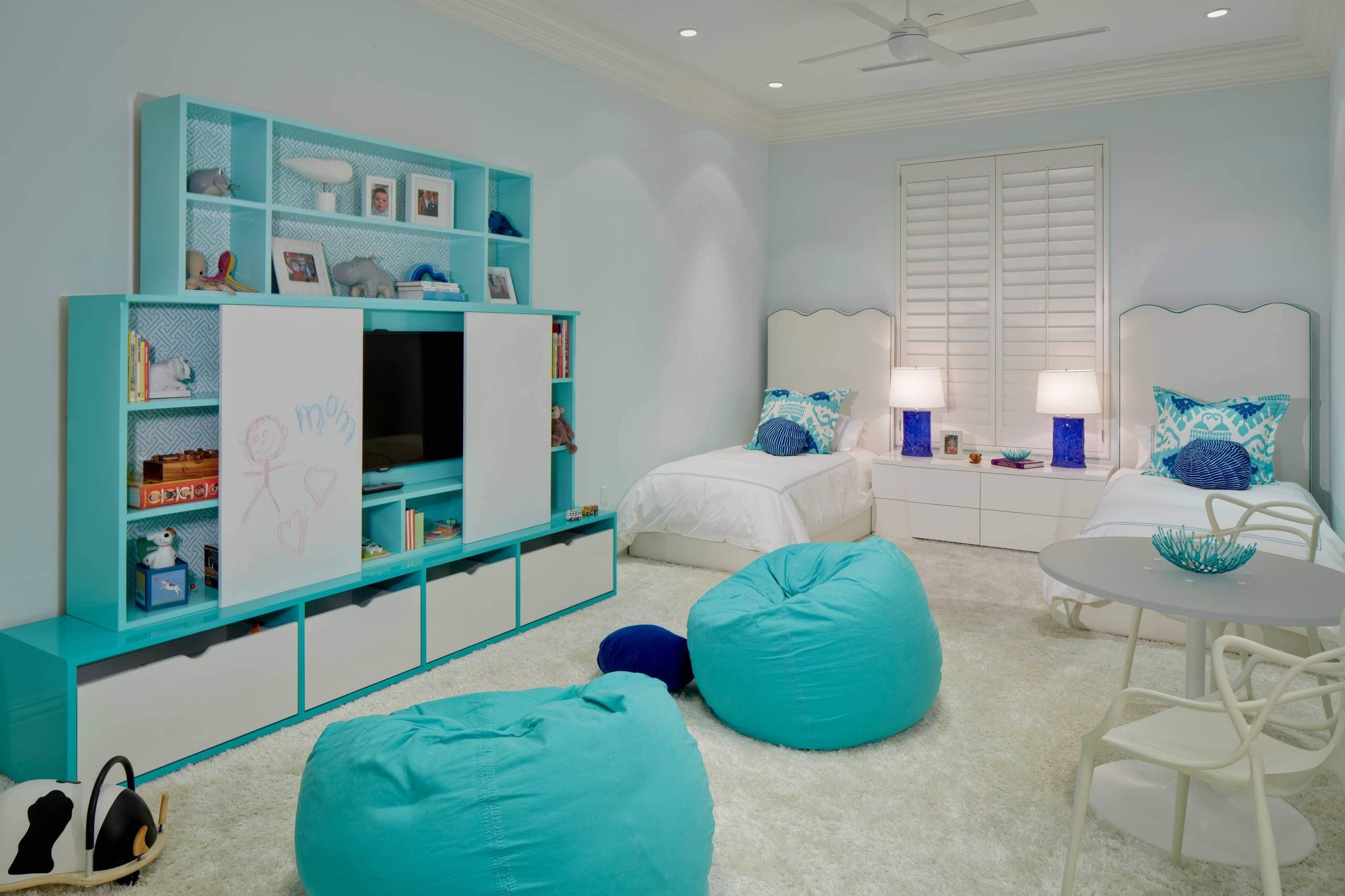
Image Credit: Leighton Design Group
Balance fun elements with practical needs like study spaces
Modern kids’ bedrooms must accommodate both play and productivity. Dedicated homework areas become increasingly important as children advance in school, requiring good lighting, comfortable seating, and organised supply storage. Consider adjustable desk lamps and ergonomic chairs that support proper posture during study sessions.
Play areas should be clearly defined but flexible. A corner with comfortable floor cushions and good lighting creates an ideal reading nook, while open floor space allows for building projects and active play. The goal is creating distinct zones that serve different purposes without feeling cramped or overwhelming.
Consider safety features like rounded corners and secure furniture
Safety considerations extend beyond obvious hazards. Window treatments should avoid cords that pose strangulation risks, while small decorative items should remain out of reach of toddlers. Electrical outlets need proper covers, and any climbing furniture like bunk beds must meet strict safety standards with proper guardrails and sturdy ladders.
Regular safety assessments help identify new risks as children grow and develop new abilities. What seemed safe for a crawler may pose dangers for an adventurous toddler, making ongoing evaluation essential for maintaining a secure environment.
Theme-Based Bedroom Ideas
Themed bedrooms capture children’s imagination while providing a cohesive design framework. The key to successful theming lies in creating immersive environments that can adapt and grow rather than overwhelming the space with temporary interests.
Safari and jungle themes with animal prints, earth tones, and adventure elements
Safari-inspired rooms embrace the wild spirit of exploration while maintaining sophisticated appeal. Earth-tone palettes featuring deep greens, warm browns, and sandy beiges create a natural foundation that won’t quickly feel outdated. Animal motifs can be incorporated through wall decals, bedding patterns, and sculptural elements without overwhelming the space.
Consider mural wallpaper featuring subtle jungle scenes or create an accent wall with removable decals that can evolve over time. Natural textures like woven baskets, bamboo accessories, and leafy plants enhance the adventure theme while serving practical storage and air-purifying functions.
Under the sea designs featuring marine life, blues, and aquatic accessories
Oceanic themes dive deep into imagination with flowing blues, aqua accents, and marine-inspired decor. Wave-shaped shelving, coral-coloured accessories, and sea creature wall art create an underwater atmosphere that feels both playful and serene. Blackout curtains in deep blue help create the illusion of ocean depths while supporting healthy sleep patterns.
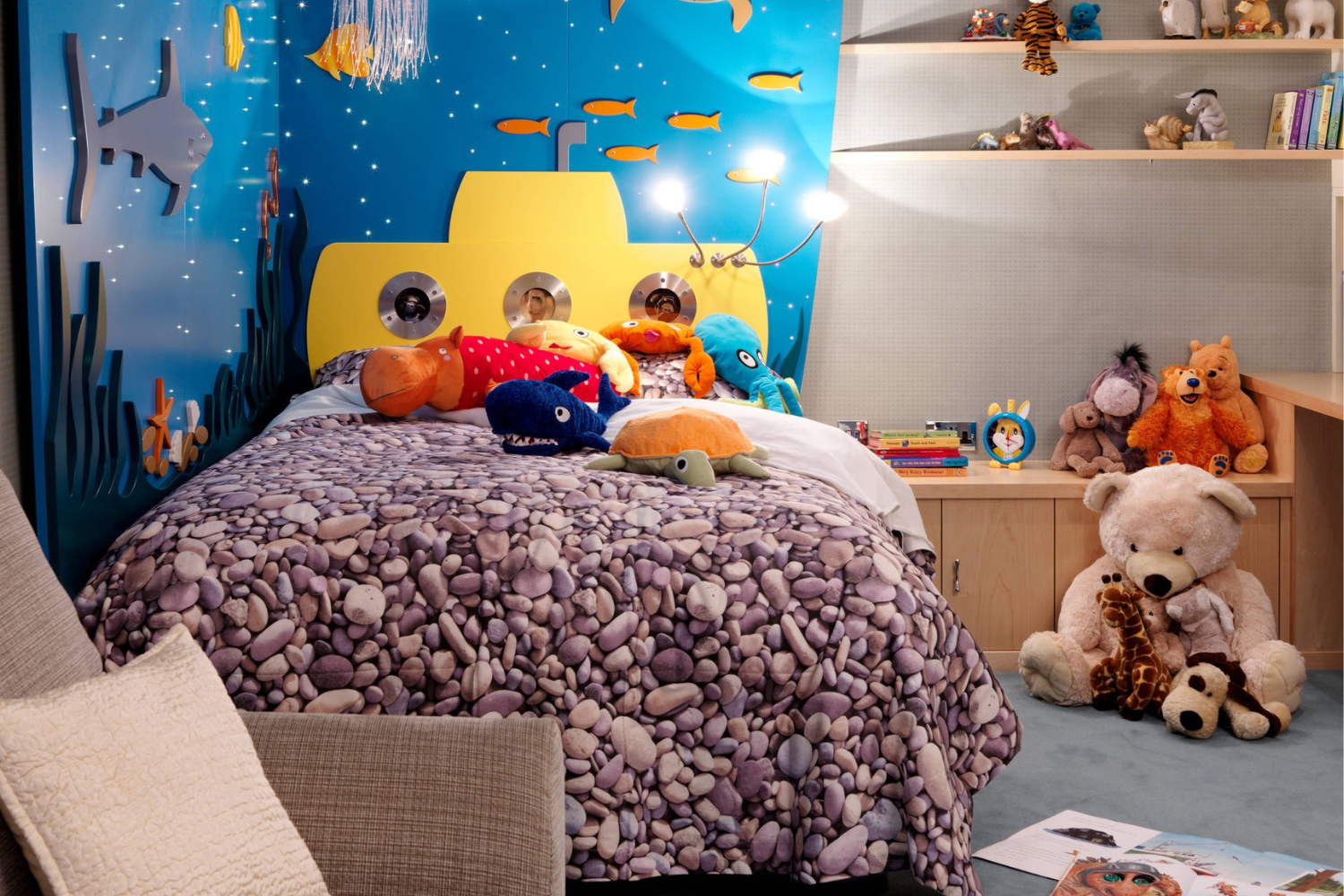
Image Credit: Space Coast Construction
Three-dimensional elements like hanging jellyfish lights or wave-textured wall panels add depth and interest. Consider incorporating educational elements like ocean fact charts or marine biology books to blend learning with the decorative theme.
Space exploration rooms with galaxy wallpaper, rocket ships, and planetary decor
The cosmos offers endless inspiration for curious minds. Galaxy wallpaper or star-painted ceilings transform bedtime into an adventure, while glow-in-the-dark elements extend the magic into nighttime hours. Rocket ship beds or space station play areas fuel imaginative play while serving practical functions.
Educational components naturally integrate into space themes, planetary mobiles teach about the solar system while adding visual interest, and astronomy charts provide learning opportunities. Consider adjustable lighting that can simulate different cosmic environments, from bright daylight for study time to dim starlight for bedtime stories.
Princess and fairy tale themes using soft pastels, magical elements, and castle motifs
Fairy tale themes have evolved beyond traditional pink palace concepts to embrace diverse storytelling elements. Soft pastels in lavender, mint, and peach create magical atmospheres without limiting future flexibility. Castle-shaped storage units, canopy elements, and fairy lights bring storybook dreams to life while serving practical purposes.
Consider incorporating global fairy tale traditions to create richer, more inclusive magical environments. Teepees, fairy doors, and enchanted forest elements can coexist with traditional castle themes, offering broader imaginative possibilities.
Dinosaur adventures with prehistoric prints, fossil displays, and earth-tone colours
Palaeontology themes combine adventure with education, appealing to children fascinated by prehistoric life. Earth-tone colour schemes in browns, greens, and rust colours create authentic prehistoric atmospheres while remaining gender-neutral and adaptable. Fossil displays, dinosaur charts, and prehistoric landscape murals transform the room into a discovery zone.
Interactive elements like excavation play areas or timeline walls make learning tangible and engaging. Consider incorporating real fossil specimens or high-quality replicas to enhance the educational value while satisfying tactile curiosity.

Image Credit: Turbo Beds
Sports-themed rooms featuring favourite teams, equipment displays, and athletic colours
Athletic themes celebrate physical activity while creating personalised spaces reflecting favourite sports or teams. Team colours provide natural colour schemes, while equipment displays serve both decorative and organisational purposes. Storage benches can house gear while providing seating for putting on shoes and equipment.
Consider incorporating multiple sports to avoid limiting future interests, and include motivational elements that encourage active lifestyles. Wall space can showcase achievements, favourite player photos, and inspirational quotes that reinforce positive athletic values.
Smart Storage Solutions
Effective storage transforms chaotic kids’ bedrooms into organised, functional spaces where children can find what they need and learn valuable life skills. The best solutions combine accessibility with visual appeal, making organisation feel natural rather than burdensome.
Built-in cube storage units for toys, books, and games organisation
Cube storage systems offer unmatched versatility for growing children. Individual cubes can house different categories of items, one for building blocks, another for art supplies, and another for books. Colour-coded bins help younger children identify where items belong, while older kids can maintain more sophisticated organisational systems.
The modular nature of cube systems allows for easy reconfiguration as needs change. Add or remove bins, adjust heights, or repurpose cubes for different functions as children grow. This adaptability makes cube storage a long-term investment that evolves with family needs.

Image Credit: Valentini Kids Furniture
Under-bed storage boxes and drawers to maximise floor space
Under-bed real estate often goes unused despite offering significant storage potential. Rolling bins provide easy access to seasonal clothing, extra bedding, or toys that rotate in and out of active use. For frequently accessed items, beds with built-in drawers offer convenient storage without requiring additional floor space.
Consider the room’s traffic patterns when selecting under-bed solutions. Rolling options work well for items accessed regularly, while more permanent drawer systems suit longer-term storage needs. Proper labelling helps maintain organisation and reduces the tendency to stuff random items into hidden spaces.
Wall-mounted shelves and floating storage for books and display items
Vertical storage maximises floor space while creating opportunities for both function and display. Floating shelves can showcase favourite books, collections, or artwork while keeping items accessible but organised. Wall-mounted cubbies provide enclosed storage that maintains clean visual lines.
Safety considerations are crucial for wall-mounted storage. Proper anchoring prevents accidents, while appropriate heights ensure children can safely access their belongings. Consider adding safety edges or choosing shelves with built-in lips to prevent items from falling.
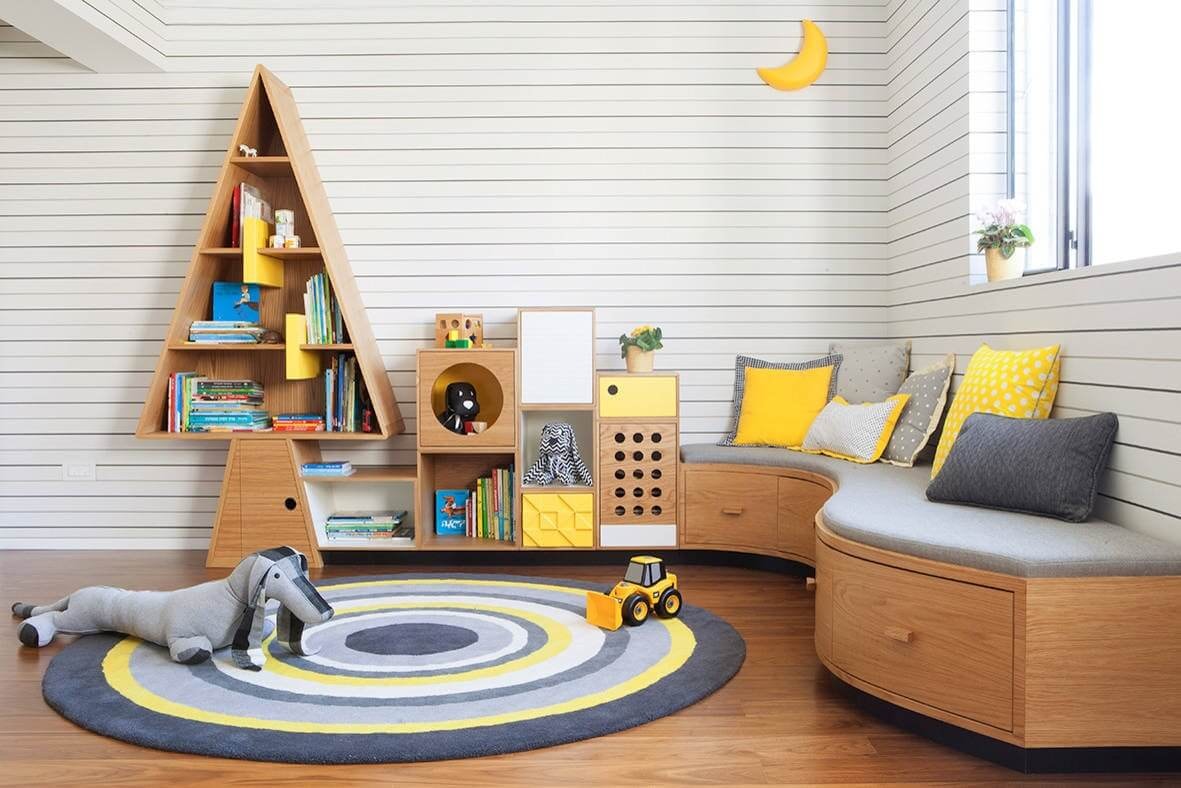
Image Credit: Sarit Shani Hay Studio
Decorative baskets in various sizes for quick toy cleanup
Baskets offer the perfect solution for rapid cleanup while adding textural interest to room decor. Different sizes accommodate various toy categories, large baskets for stuffed animals, medium ones for building sets, and small ones for craft supplies. Natural materials like seagrass or cotton coordinate with virtually any decor style while remaining durable enough for daily use.
Teach children the “one-basket” rule, when a basket becomes full, it’s time to sort through and donate items no longer used. This approach prevents accumulation while teaching valuable lessons about consumption and sharing with others.
Multi-functional furniture like storage ottomans and bench seating
Furniture that serves multiple purposes maximises value in children’s rooms where space is often limited. Storage ottomans provide seating for reading or putting on shoes while hiding toys, games, or seasonal items. Bench seating with built-in storage offers comfortable seating for friends during playdates while organising sports equipment or art supplies.
Window seat benches with storage create cosy reading nooks while providing space for books, blankets, or games. These multi-purpose pieces reduce furniture needs while increasing functionality, making rooms feel less cluttered and more intentional.
Custom wardrobe organisers with child-height hanging rods and compartments
Wardrobe organisation systems designed for children’s proportions encourage independence and responsibility. Lower hanging rods allow kids to select and hang their own clothing, while adjustable shelving accommodates changing needs as children grow. Labelled compartments for different clothing types teach organisational skills while streamlining daily routines.
Include both hanging and folded storage options to accommodate different clothing types. Shoes, accessories, and special occasion items need designated spaces that remain accessible but organised. Consider adding a small hamper or laundry bin to encourage proper care of clothing.
Creative Wall Decor Ideas
Walls provide the largest canvas for creativity in kids bedrooms, offering opportunities to inspire, educate, and personalise spaces. The most effective wall treatments balance visual interest with flexibility, allowing for easy updates as children’s interests evolve.

Image Credit: Emma Green Design
Removable wall decals and stickers for easy updates as children grow
Peel-and-stick wall decals revolutionise kids room decorating by offering dramatic visual impact without permanent commitment. High-quality decals can be repositioned multiple times without damaging paint, making them perfect for rental properties or frequently changing tastes. Choose decals that complement your colour scheme rather than compete with it for lasting appeal.
Layer different sizes and styles to create custom compositions that reflect your child’s personality. Combine alphabet letters with favourite animals, or mix geometric shapes with inspirational words. The key is creating cohesive looks that feel intentional rather than randomly applied.
Gallery walls featuring your child’s artwork in colourful frames
Rotating art galleries celebrate children’s creativity while teaching appreciation for artistic expression. Mix frame sizes and colours to create dynamic displays that can accommodate different artwork sizes. Consider including a few empty frames that can be quickly filled with new creations, maintaining the gallery’s completeness while allowing for easy updates.
Document your child’s artistic development by photographing artwork before rotating new pieces into the display. Create annual art books or digital albums that preserve these precious memories while keeping physical clutter manageable.
Educational wall charts including world maps, alphabet, and number displays
Learning-focused wall decor transforms downtime into educational opportunities. Interactive world maps encourage geography exploration, while alphabet and number charts support academic development. Choose designs that coordinate with your room’s aesthetic to maintain visual harmony while providing educational value.
Update educational displays periodically to match your child’s developmental level and interests. Primary students might enjoy periodic table charts or multiplication tables, while younger children benefit from basic concepts like colours, shapes, and weather patterns.
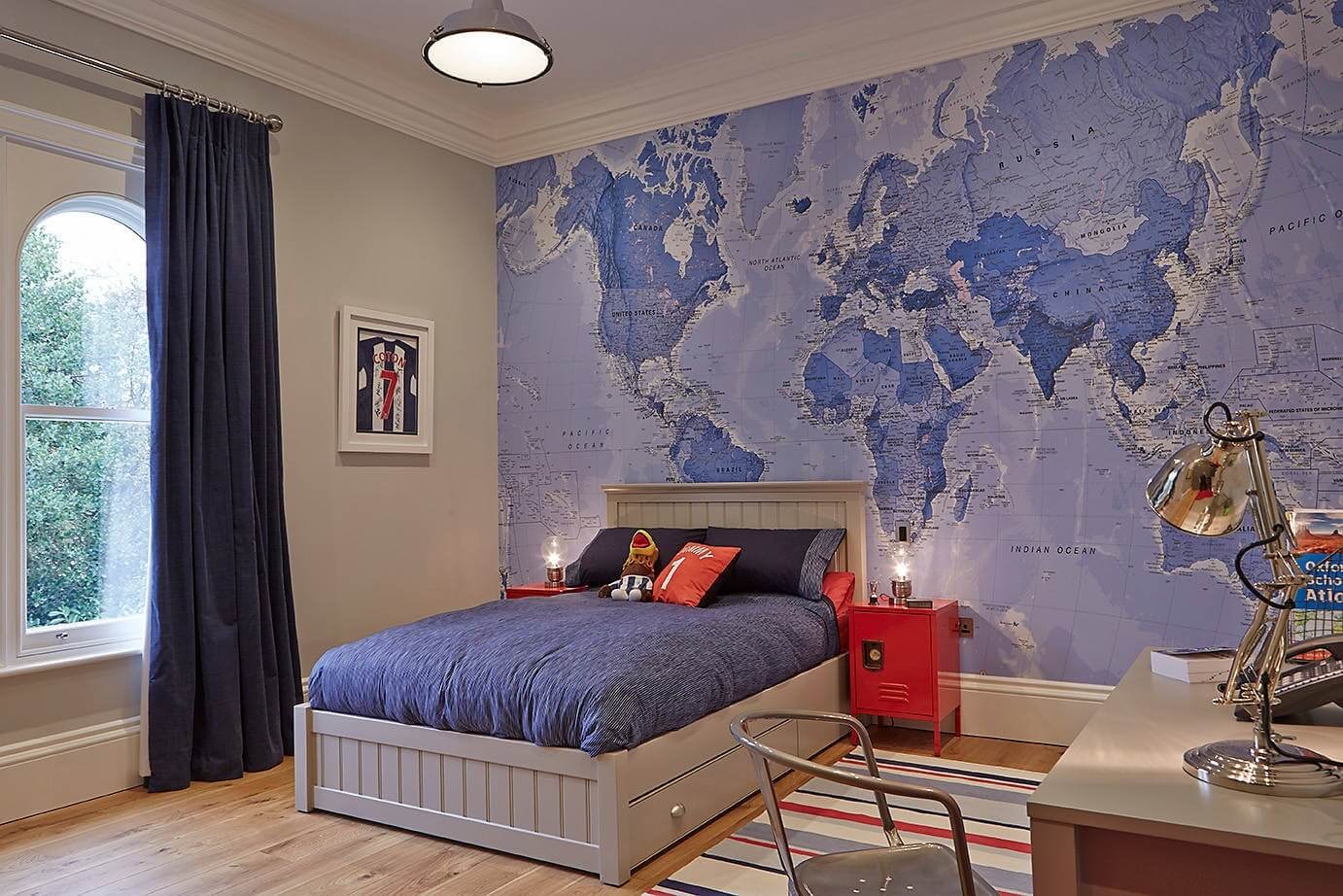
Image Credit: Hovia
3D wall elements like floating shelves shaped as clouds or trees
Three-dimensional wall elements add depth and whimsy while serving practical purposes. Cloud-shaped shelves create magical storage for small treasures, while tree-shaped bookshelf installations encourage reading habits. These sculptural elements become focal points that anchor room designs while providing functional storage.
Consider commissioning custom pieces that reflect your child’s specific interests or room themes. A space enthusiast might love planet-shaped shelving, while an animal lover could treasure safari-themed wall sculptures that double as display areas.
Chalkboard or whiteboard paint sections for creative expression
Interactive wall surfaces encourage creativity while containing mess to designated areas. Chalkboard paint creates classic drawing surfaces that coordinate with virtually any decor style, while whiteboard paint offers modern alternatives that work with colourful dry-erase markers. Magnetic paint additions create surfaces for displaying artwork or educational materials.
Frame painted areas with decorative moulding to create finished, intentional looks that feel like built-in features rather than afterthoughts. Include storage for art supplies nearby to encourage regular use and maintain organisation.
Fabric wall hangings and tapestries for added texture and warmth
Textile wall treatments introduce softness and acoustic benefits while adding visual interest. Tapestries, fabric panels, or stretched canvas pieces create focal points that can be easily changed seasonally or as tastes evolve. Natural fibre options like cotton or linen coordinate with sustainable decorating approaches while providing durability.
Consider creating custom fabric panels using your child’s favourite colours or patterns. Simple wooden frames can stretch fabric to create affordable, personalised artwork that perfectly coordinates with room decor while adding warmth and texture to hard surfaces.
Lighting and Ambiance
Thoughtful lighting design transforms kids bedrooms from purely functional spaces into warm, inviting environments that support both active play and restful sleep. Layered lighting approaches accommodate different activities while creating magical atmospheres that spark imagination.
Overhead lighting with dimmer switches for bedtime routines
Central lighting with dimming capabilities provides essential functionality while supporting healthy sleep habits. Bright light energises morning routines and homework sessions, while dimmed settings ease the transition to bedtime. Consider fixtures that diffuse light evenly to avoid harsh shadows that can feel intimidating to young children.
Programmable dimmer systems can automatically adjust lighting throughout the day, supporting natural circadian rhythms. Gradual dimming during evening hours helps signal bedtime approaching, while gentle morning brightening can ease wake-up routines.

Image Credit: In the Deets
Fun-shaped nightlights including stars, animals, and favourite characters
Nightlights provide comfort and security while adding whimsical touches to room decor. Star projectors create magical ceiling displays that entertain during bedtime stories, while animal-shaped lights offer friendly companions during dark hours. Character-themed options allow personalisation while serving practical safety functions.
Choose nightlights with appropriate brightness levels, enough to navigate safely but not so bright as to interfere with sleep quality. Timer functions automatically turn lights off after children fall asleep, conserving energy while maintaining bedtime security.
String lights or fairy lights for magical evening ambiance
String lighting creates enchanting atmospheres that make bedtime feel special rather than burdensome. Warm white LED options provide gentle illumination while remaining energy-efficient and safe for children’s rooms. Battery-operated versions eliminate cord hazards while offering placement flexibility.
Incorporate string lights into room themes, wrap them around canopy frames, outline doorways or windows, or create constellation patterns on walls or ceilings. The soft, twinkling effect promotes relaxation while adding sparkle that appeals to children’s sense of wonder.
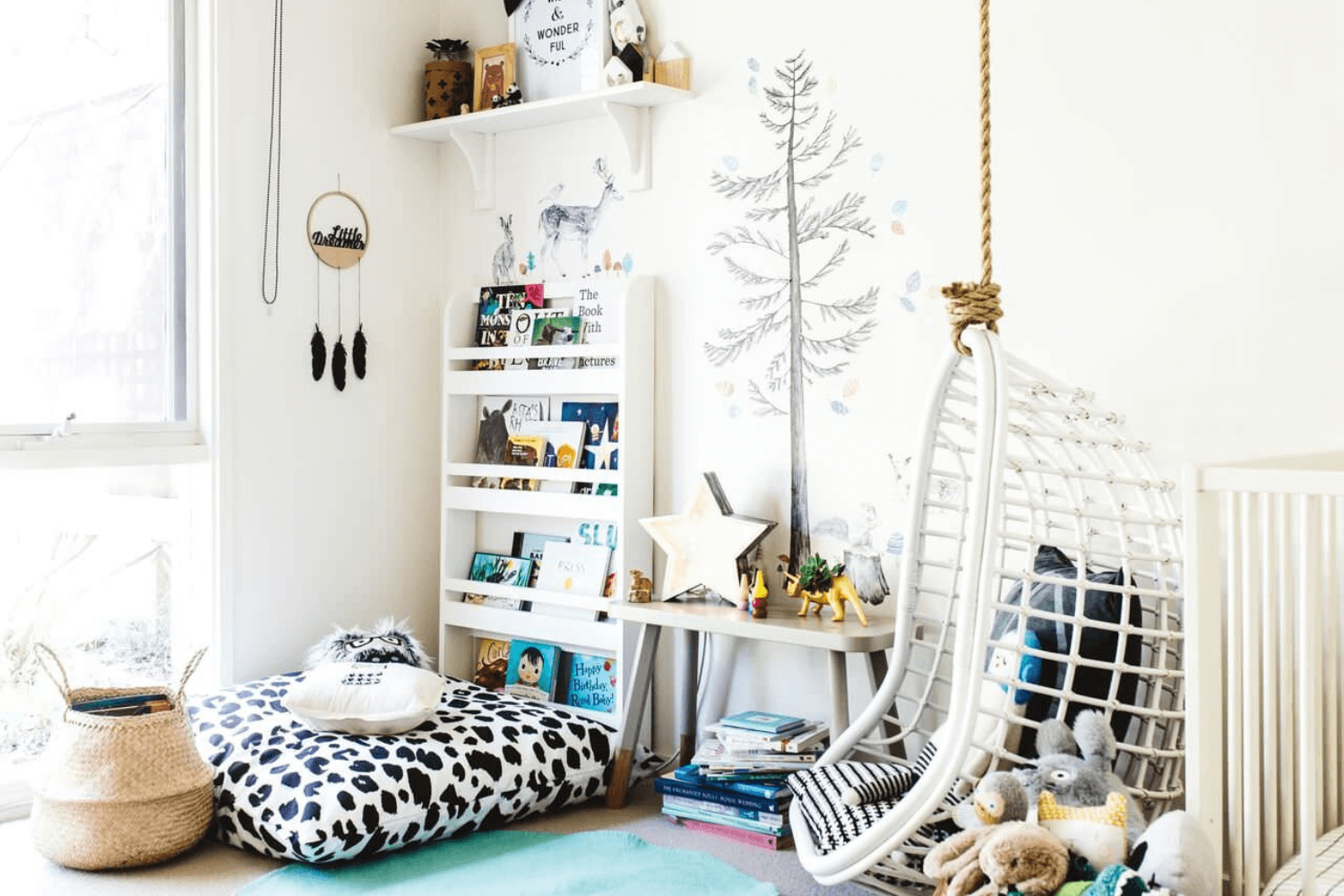
Image Credit: Hide & Sleep Interior Design
Task lighting for reading nooks and homework areas
Dedicated task lighting prevents eye strain while supporting learning activities. Adjustable desk lamps allow precise light positioning for homework sessions, while reading lights can be clipped to beds or chairs for bedtime stories. Choose warm white LEDs that provide adequate brightness without creating harsh glare.
Consider children’s developing independence when selecting task lighting. Easy-to-reach switches and simple adjustment mechanisms allow kids to control their lighting needs while building responsibility for their environment.
Themed table lamps that complement the room’s overall design
Decorative table lamps serve dual purposes as functional lighting and design elements. Choose bases that reflect room themes, sailboat lamps for nautical rooms, animal figures for safari themes, or geometric shapes for modern spaces. Fabric shades can coordinate with bedding or window treatments for cohesive looks.
Scale lamp selection to room proportions and furniture sizes. Oversized lamps can overwhelm small spaces, while tiny fixtures may not provide adequate lighting. Consider safety features like weighted bases and short cords that minimise tip-over risks.
Natural light enhancement with colourful curtains or blackout options
Window treatments balance natural light control with decor coordination. Sheer curtains in coordinating colours filter harsh sunlight while maintaining bright, cheerful atmospheres during daytime hours. Blackout options support quality sleep while providing complete light control for naps or early bedtimes.
Layered window treatments offer maximum flexibility, combine blackout panels with decorative valances or tie-backs that can be adjusted based on activities and time of day. Consider motorised options for upper windows that may be difficult for children to reach safely.
Bed Options and Sleep Spaces
The bed serves as the focal point of any child’s room, influencing both the space’s functionality and aesthetic appeal. Selecting appropriate sleep furniture requires balancing immediate needs with long-term adaptability, safety considerations, and space constraints.
Low-profile toddler beds for easy transition from cots
Toddler beds bridge the gap between cots and full-size beds, offering security and independence for developing children. Low profiles minimise fall risks while built-in guardrails provide boundary comfort for children accustomed to cot containment. Many convertible cot systems include toddler bed conversion kits, extending furniture investment value.
Safety features remain paramount during this transition period. Rounded corners, stable construction, and appropriate mattress fit prevent gaps where small children might become trapped. Consider beds with built-in storage to maximise space efficiency in smaller rooms.

Image Credit: Amy Maguire
Space-saving bunk beds for shared rooms or sleepovers
Bunk beds maximise sleeping capacity while preserving floor space for play and storage. Modern designs prioritise safety with sturdy guardrails, stable ladders, and proper spacing between levels. Choose configurations that suit room layouts, traditional stacked designs for narrow rooms, or L-shaped arrangements that create cosy play nooks underneath.
Age restrictions apply to upper bunks, children under six should not sleep on elevated levels due to developmental and safety considerations. Consider beds with removable upper sections that can separate into individual beds as needs change or children age out of sharing arrangements.
Loft beds with play areas or desks underneath
Loft configurations transform floor space into functional areas while maintaining comfortable sleeping arrangements. Study zones underneath elevated beds create private homework areas, while play spaces encourage imaginative activities. This vertical approach particularly benefits smaller rooms where space efficiency is crucial.
Ensure adequate headroom for both sleeping and underneath activities. Consider ceiling heights carefully, children should be able to sit up comfortably in bed while underneath areas accommodate standing and movement. Safety railings and stable access ladders remain essential for preventing accidents.
Themed bed frames including race cars, castles, and boats
Novelty bed frames transform sleep time into adventure while serving as major room focal points. Car-shaped beds appeal to transportation enthusiasts, while castle designs create royal retreats. Boat beds can anchor nautical themes while providing unique storage opportunities in built-in compartments.
Consider longevity when selecting themed frames, will your child still love race cars in three years? Look for designs that can be updated with different bedding and accessories rather than completely replaced as interests evolve. Quality construction ensures these investment pieces survive enthusiastic play and daily use.
Daybed options that double as seating for reading and play
Daybeds offer versatile solutions for multipurpose rooms where sleep space must accommodate daily activities. During daytime hours, these beds function as sofas for reading, homework, or socialising with friends. Trundle options provide additional sleeping space for sleepovers while maintaining compact footprints during regular use.
Choose daybeds with supportive mattresses suitable for both sitting and sleeping. Add plenty of pillows and throws to enhance comfort during daytime use, and consider storage options within or underneath frames to maximise organisation opportunities.
Twin and full-size beds with fun headboards and bedding sets
Standard bed sizes offer maximum flexibility for growing children and evolving room arrangements. Custom or decorative headboards create personality without requiring specialty mattresses or limiting future furniture choices. Full-size options accommodate growth spurts and provide comfortable space for reading or relaxing.
Headboard options range from simple painted designs to elaborate built-in storage units with shelving and lighting. Consider creating changeable headboard treatments using removable panels, decals, or fabric that can be updated as children’s tastes mature without replacing entire bed frames.
Play and Activity Areas
Designated activity zones within kids bedrooms support development while maintaining organisation and functionality. Thoughtful planning creates spaces that encourage creativity, learning, and independent play without overwhelming limited square footage.
Dedicated reading corners with comfortable seating and good lighting
Reading nooks foster literacy while creating peaceful retreats within busy bedrooms. Comfortable seating options include bean bags, floor cushions, or small chairs scaled to children’s proportions. Good lighting is essential, natural light near windows supplemented by adjustable task lighting for evening reading sessions.
Create defined boundaries using area rugs, bookshelves, or fabric canopies that establish the reading zone as special space. Include storage for current favourites and library books, and consider adding small side tables for drinks or snacks during longer reading sessions.

Image Credit: Mosby Building Arts
Art stations with supplies storage and easy-to-clean surfaces
Creative expression requires dedicated workspace with proper storage and mess management. Child-height tables with washable surfaces encourage artistic exploration while containing potential chaos. Rolling carts organise supplies and can be moved aside when not in use, preserving floor space for other activities.
Include a variety of storage solutions for different art supplies, cups for crayons and markers, flat drawers for paper, and bins for bulkier items like paint bottles or craft materials. Display areas nearby showcase finished artwork while encouraging continued creative efforts.
Building block play areas with organised storage systems
Construction toys require significant floor space and efficient storage to prevent overwhelming room organisation. Define building zones using colourful area rugs that protect floors while creating clear boundaries. Storage systems should allow easy sorting, separate bins for different block types or LEGO collections organised by colour or size.
Consider fold-out or roll-out play mats with building scenes printed on surfaces. These define activity areas while providing thematic backgrounds for construction projects. When playtime ends, blocks can be quickly gathered and stored while mats fold away to preserve floor space.
Dress-up stations with costume storage and mirrors
Imaginative play benefits from designated dress-up areas with accessible costume storage and safe mirrors for admiring transformations. Low-hanging rods allow children to browse and select costumes independently, while bins or baskets organise accessories like hats, jewellery, and props.
Safety considerations include securing mirrors properly and choosing child-safe materials for all accessories. Consider including a small stool or bench for sitting while putting on shoes or accessories, and ensure adequate lighting for getting dressed and admiring costumes.
Musical corners for instruments and music-related activities
Music education and appreciation benefit from dedicated spaces with proper storage for instruments and accessories. Consider acoustic treatments like fabric panels or rugs to absorb sound and prevent noise from disturbing family members or neighbours. Storage solutions should protect instruments while keeping them accessible for regular practice.
Include music stands, metronomes, and sheet music storage as children advance in their musical education. Comfortable seating encourages practice sessions while proper lighting prevents eye strain during music reading. Consider soundproofing options for serious musicians or flat living situations.

Image Credit: Margaret L. Norcott
Quiet zones for puzzles, board games, and focused activities
Peaceful activity areas support concentration and independent play while providing alternatives to electronic entertainment. Comfortable floor seating with back support encourages longer engagement with puzzles, board games, or detailed activities like model building or crafts.
Storage nearby should accommodate various activity types, flat storage for puzzles, bins for game pieces, and shelving for books or instruction manuals. Good lighting prevents eye strain during detailed work, while comfortable temperatures encourage extended focused play sessions.
Age-Appropriate Design Considerations
Successful kids bedroom design anticipates developmental changes and adapts to evolving needs throughout childhood. Understanding age-specific requirements ensures spaces remain safe, functional, and engaging as children grow from toddlers to independent teenagers.
Toddler rooms with rounded furniture corners and safety latches
Toddler safety requires comprehensive room evaluation and appropriate modifications. Furniture corners should be rounded or padded to prevent injuries during active play, while safety latches secure drawers and cabinets containing potentially hazardous items. Outlet covers and cord management prevent electrical accidents.
Window safety becomes crucial as climbing abilities develop. Window guards or stops prevent dangerous falls while cord-free window treatments eliminate strangulation hazards. Floor materials should provide cushioning for inevitable tumbles while remaining easy to clean and maintain.
Primary age designs incorporating learning elements and hobby displays
School-age children benefit from environments that support academic achievement and personal interests. Study areas become essential with adequate lighting, comfortable seating, and organised supply storage. Display areas can showcase school projects, hobby collections, or achievement awards that build confidence and motivation.
Storage needs evolve to accommodate school supplies, sports equipment, and expanding toy collections. Organisational systems should teach responsibility while remaining manageable for developing motor skills and attention spans. Colour-coding and labelling help maintain order while building literacy skills.
Tween spaces balancing childhood fun with growing independence
Tweens navigate the complex transition between childhood and adolescence, requiring spaces that honour both aspects of their development. Maintain some playful elements while introducing more sophisticated design choices that reflect developing personal style. Privacy becomes increasingly important, with areas for journaling, phone calls, or quiet reflection.
Furniture choices should accommodate physical growth spurts and changing activity preferences. Study areas may need expansion for increased homework loads, while social spaces become important for friendship development. Storage solutions must adapt to changing interests and material possessions.
Teen room adaptations with study areas and personal expression zones
Teenage bedrooms serve as personal sanctuaries requiring respect for developing autonomy and individual expression. Study areas must accommodate serious academic work with proper ergonomics and technology integration. Personal expression through decor choices, colour schemes, and organisation systems supports identity development.
Privacy considerations include window treatments, sound management, and spatial arrangements that support independence while maintaining family connection. Storage solutions should accommodate adult-sized belongings while providing organisation for school materials, personal care items, and hobby supplies.
Flexible designs that can evolve with changing interests and needs
The most successful kids bedroom designs anticipate change and accommodate evolution without requiring complete overhauls. Neutral base elements like flooring, wall colour, and major furniture pieces provide foundations that support various decorative themes over time. Accessories, bedding, and removable elements enable updates that reflect changing interests.
Investment in quality, adaptable furniture pieces pays dividends over time. Modular storage systems can be reconfigured, while convertible beds accommodate physical growth. This approach reduces waste while providing consistent environments that support healthy development throughout childhood stages.
Furniture choices that accommodate growth spurts and changing body sizes
Physical development varies significantly among children, requiring furniture selections that accommodate different body sizes and proportions. Adjustable elements like desk heights, chair positions, and bed configurations ensure continued comfort and functionality as children grow rapidly during certain developmental periods.
Consider anthropometric data when selecting furniture, seat heights, desk depths, and storage accessibility should match children’s physical capabilities while providing room for growth. Quality construction ensures furniture survives the active use typical of childhood while maintaining safety and functionality over time.
Budget-Friendly Decorating Tips
Creating beautiful, functional kids bedrooms doesn’t require unlimited budgets. Strategic spending, creative repurposing, and DIY projects can achieve professional-looking results while teaching valuable lessons about resourcefulness and creativity.
DIY projects including painted furniture and handmade wall art
Furniture transformation through paint offers dramatic impact at minimal cost. Sand, prime, and paint existing pieces in fresh colours that coordinate with new room schemes. Stencils, decals, or hand-painted designs can personalise furniture while building family memories through collaborative projects.
Handmade wall art provides unique decoration while encouraging creativity. Canvas paintings, photo collages, or mixed-media projects create personalised touches that reflect family values and children’s interests. Frame inexpensive prints or create custom artwork using digital photography and home printing capabilities.
Charity shop finds that can be refreshed with paint and new hardware
Second-hand furniture often features solid construction at a fraction of retail costs. Look for pieces with good bones that can be updated through painting, hardware replacement, or minor repairs. Dressers, desks, and chairs frequently benefit from simple cosmetic updates that transform appearance completely.
Research furniture types and brands to identify quality pieces worth investing refinishing time. Solid wood construction typically refinishes better than particle board, while classic designs adapt to various decorating styles over time. Safety considerations remain important, ensure older pieces meet current safety standards before use in children’s rooms.

Image Credit: KM Design Co.
Fabric remnants for creating custom pillows and window treatments
Fabric shops often offer remnant sections with discounted materials perfect for small projects. Custom pillows, curtain panels, or bedding accents can coordinate room colours while providing unique touches unavailable in retail shops. Basic sewing skills or simple no-sew techniques make these projects accessible to most skill levels.
Consider fabric durability and care requirements when selecting materials for children’s rooms. Washable fabrics withstand frequent cleaning while colourfast options maintain appearance over time. Mix patterns and textures to create visual interest while maintaining colour coordination throughout the space.
Printable wall art and educational posters for instant decoration
Digital downloads offer immediate decoration solutions at minimal cost. Educational prints, inspirational quotes, or themed artwork can be printed at home or local print shops for quick room updates. Frame collections in matching frames for professional appearances or create gallery walls with varied frame styles for eclectic looks.
Seasonal printables allow easy room refreshing throughout the year. Holiday themes, motivational messages, or educational content can be rotated regularly to maintain visual interest while providing learning opportunities. Store unused prints in protective sleeves for future use or sharing with friends.
Repurposing everyday items as storage and organisational solutions
Creative repurposing transforms household items into functional storage while reducing waste and expenses. Mason jars organise craft supplies, while shoe organisers can store books, toys, or accessories. Ice cream containers with decorative paper covering become attractive storage bins for toys or art supplies.
Cardboard boxes can be covered with contact paper or fabric to create custom storage solutions that perfectly fit available spaces. Old suitcases become under-bed storage or display elements, while wooden crates can be stacked or mounted as shelving units. The key is viewing household items with fresh eyes for potential alternative uses.
Seasonal updates using removable elements like throw pillows and accessories
Small changes create significant visual impact without major expenses. Seasonal pillow covers, throws, or accessories can transform room moods while allowing easy storage of off-season items. This approach teaches children about seasonal changes while maintaining budget control.
Focus updates on easily changeable elements like bedding accents, wall decals, or decorative accessories. These items can be stored compactly and rotated seasonally or as interests change. Involve children in selection and installation processes to build ownership and decision-making skills while managing expectations about consumption and spending.
Remember that creating the perfect kids bedroom is a journey, not a destination. Start with safety and basic functionality, then add personality and special touches over time. Involve your child in age-appropriate decisions to ensure the space truly reflects their needs and interests while building confidence and ownership in their personal environment.
The most successful kids’ bedrooms grow and evolve with their occupants, providing consistent comfort and support throughout the exciting journey of childhood development. By focusing on quality basics, creative storage solutions, and flexible design elements, you can create spaces that serve your family well while bringing daily joy to your little ones’ lives.
If you enjoyed these ideas check out our Boys Bedroom Ideas, Girls Bedroom Ideas, Teen Bedroom Ideas and Toddler Room Ideas


