


This article offers practical boys’ bedroom ideas to create a space that grows with your child, balancing style, function, and adaptability. It covers tips for managing clutter, incorporating current interests, and designing a room that works from childhood through the teenage years without frequent overhauls.


Designing the perfect boys room shouldn’t feel like solving a puzzle with constantly changing pieces. Yet that’s exactly what many parents face when trying to create a space that balances current interests with future needs, manages the inevitable clutter, and somehow survives the journey from Thomas the Tank Engine to teenage independence.
The good news? With the right foundation and smart planning, you can create a boys bedroom that adapts and grows without requiring a complete overhaul every few years. Whether you’re starting from scratch or refreshing an existing space, these boys bedroom ideas will help you design a room that’s both functional and stylish, no matter what age or stage your son is in.

Image Credit: Chango
Essential Elements for Boys Bedrooms
Creating a successful boys bedroom starts with understanding the core elements that make any space both liveable and lovable. The ultimate goal isn’t just a room that looks great in photos, it’s a space that functions seamlessly for sleep, play, study, and everything in between.
Start with a cohesive colour palette using classic neutrals like white, navy, or grey as the foundation
The secret to a timeless boys room lies in the base colour palette. Interior designers consistently recommend starting with classic neutrals like white, navy, or grey because these colours create a sophisticated foundation that won’t feel dated as your child grows. Navy blue, in particular, offers the perfect balance, it’s bold enough to feel intentional but neutral enough to work with virtually any accent colour your son gravitates toward.
This approach also makes financial sense. When you invest in furniture and major decor pieces in neutral tones, you can refresh the room’s personality through smaller, less expensive elements like bedding, wall art, and accessories. It’s an easy way to keep up with changing interests without breaking the budget.
Choose furniture that grows with your child, such as platform beds with built-in storage or convertible pieces
Smart furniture selection can make or break a boys bedroom design. Platform beds with built-in storage, for example, can increase your storage capacity by 25-30% without requiring additional floor space, a game-changer in smaller rooms. Look for pieces that serve multiple functions: desks that can transition from craft tables to homework stations, or loft beds that create space for a study area underneath.
The average child’s bedroom is refurnished 1-2 times before age 18, according to furniture industry data. By choosing convertible and modular pieces upfront, you can significantly reduce this number whilst providing better functionality throughout your child’s development.
Incorporate your son’s interests through removable elements like wall art, bedding, and accessories
Here’s where many parents get it wrong: they commit to permanent design elements based on temporary interests. A smarter approach focuses on easily changeable items that can evolve with your son’s personality. Wall decals, themed bedding, and gallery wall displays let you celebrate current passions, whether that’s Star Wars, sports, or dinosaurs, without making irreversible design decisions.
This strategy acknowledges that children’s interests typically cycle every 1-2 years. Instead of painting murals or installing themed built-ins, create a flexible canvas that can adapt to new phases without major renovation.
Balance fun themes with timeless design to avoid frequent redecorating
The key to successful boys room ideas lies in finding the sweet spot between personality and longevity. Use the 80/20 rule: 80% timeless elements (furniture, wall colour, major decor) and 20% trend-driven pieces (throw pillows, posters, small accessories). This balance ensures the room feels current and personal without requiring frequent overhauls.

Image Credit: Organized Living
Include adequate storage solutions to manage toys, clothes, and sports equipment
Storage isn’t just about keeping things tidy, it’s about creating systems that actually work for how boys live and play. The most successful boys bedrooms incorporate multiple types of storage: open shelving for frequently used items, closed storage for visual calm, and specialised solutions for specific needs like sports equipment or collections.
Consider your son’s habits when planning storage. If he’s the type to dump everything on the floor, closed storage might create more frustration than open bins he can easily access and maintain.
Age-Appropriate Design Strategies
One size definitely doesn’t fit all when it comes to boys bedroom design. What works for a 4-year-old will feel babyish to a 10-year-old, and what appeals to a tween might horrify a teenager. Understanding these developmental shifts helps you make design decisions that feel right now whilst setting the stage for easy transitions later.
Toddler to Elementary (Ages 3-8)
The toddler to elementary years are all about creating a safe, nurturing environment that encourages independence and creativity. Safety considerations take priority, but that doesn’t mean sacrificing style or fun.
Use low-to-the-ground beds for easy transitions from cribs to big kid beds
The transition from crib to big kid bed is a major milestone, and the right bed choice can make it smoother for everyone. Low platform beds or beds with built-in guardrails help kids feel secure whilst giving them the independence to get in and out on their own. Many parents find that floor beds or very low frames work well during this transition period.
Consider mattress quality carefully at this stage. A good mattress supports healthy sleep patterns that will serve your child for years. It’s worth investing in quality here, as sleep directly impacts everything from mood to learning capacity.
Create cosy reading nooks with soft rugs and cushioned seating
Research consistently shows that children with dedicated, comfortable reading spaces read significantly more than those without. A simple reading nook, perhaps just a corner with a soft rug, some floor cushions, and good light, can double a child’s daily reading time.
The key is making it feel special and separate from the rest of the room. Even in small spaces, you can create this sense of enclosure with a small tent, canopy, or strategically placed furniture.

Image Credit: Lucy Interior Design
Incorporate playful themes like dinosaurs, outer space, or favourite cartoon characters
This is the age when themed rooms really shine, but remember to implement themes through changeable elements. Dinosaur bedding, space-themed wall decals, or character throw pillows let you fully embrace your child’s current obsession without permanent commitment.
Wall art offers another great opportunity for theme expression. Create a gallery wall that can evolve, start with a few themed prints and add to it over time as interests develop.
Add safety features like rounded furniture corners and soft flooring surfaces
Safety doesn’t have to mean ugly. Look for furniture with naturally rounded edges, or add corner guards that blend with your decor. Soft area rugs provide cushioning for inevitable tumbles whilst adding warmth and colour to the space.
Pay attention to window treatments too. Cordless blinds or curtains eliminate strangulation hazards whilst maintaining the room’s style.
Include toy storage solutions that encourage cleanup, such as labelled bins and open shelving
The best storage systems for this age group are ones kids can actually use independently. Open bins work better than complex organisational systems. Labelling helps, but use pictures alongside words for pre-readers.
Make cleanup part of the room’s design, not an afterthought. When storage is attractive and accessible, kids are more likely to use it consistently.
Tween Years (Ages 9-12)
The tween years bring new challenges as children seek more sophistication whilst still needing guidance and structure. This is when boys start developing stronger opinions about their space and begin pushing for more independence in design decisions.
Transition to more sophisticated colour schemes whilst maintaining youthful elements
Tweens often reject anything that feels “too little kid” but aren’t ready for full adult sophistication. This is where refined versions of classic boy-friendly colours work well. Instead of bright primary blue, try navy. Swap cartoon themes for more abstract geometric patterns or subtle nods to interests.
The goal is evolution, not revolution. Build on the existing foundation whilst adding elements that feel more mature.

Image Credit: TRG Architecture
Create dedicated homework zones with proper desk lighting and organisation systems
Academic demands increase significantly during the tween years, making a proper study space essential. Position the desk near natural light if possible, and invest in quality task lighting for evening work. Good ergonomics matter more now that homework sessions are longer and more frequent.
Organisation systems need to handle school supplies, textbooks, and project materials. Wall-mounted organisers keep the desk surface clear whilst providing easy access to frequently used items.
Display collections like LEGO builds, sports memorabilia, or musical instruments as decor
Tweens often develop serious interests in specific hobbies or activities. Instead of hiding these collections, make them part of the room’s decor. Floating shelves can showcase LEGO creations, wall-mounted displays work for sports memorabilia, and instrument hangers turn musical gear into wall art.
This approach celebrates your child’s passions whilst keeping collections organised and protected.
Incorporate technology-friendly features like charging stations and cable management
Technology becomes a bigger part of life during the tween years. Plan for this by including accessible outlets, designated charging areas, and cable management solutions. Built-in charging stations keep devices organised whilst preventing the chaos of cords and chargers scattered around the room.
Consider the layout carefully, tech zones should be easily supervised but not intrusive in the overall room design.
Add privacy elements like curtains around beds or designated chill-out corners
Tweens begin craving privacy and personal space. You can acknowledge this need without major renovation by adding elements like bed curtains, room dividers, or designated quiet zones. Even a bean bag chair in a corner can become a special retreat space.
The key is creating options for both social interaction and solitude within the same room.
Teen Boys (Ages 13+)
Teenage boys want spaces that feel grown-up and reflect their developing identity. This is the time to involve them heavily in design decisions whilst providing guidance on practical considerations and budget constraints.

Image Credit: Maria DeCotiis Interior Design
Embrace darker, more mature colour palettes like charcoal grey, navy blue, or forest green
Teen boys often gravitate toward more dramatic, sophisticated colours. Charcoal grey, deep navy, or forest green create the mature atmosphere they crave whilst still providing a versatile backdrop for personal expression. These colours also hide dirt and wear better than lighter alternatives, a practical consideration for teen spaces.
Don’t be afraid of dark colours in bedrooms. With proper lighting, they can create a cosy, sophisticated atmosphere that feels distinctly different from childhood spaces.
Include multi-functional furniture like loft beds with study areas underneath
Space efficiency becomes crucial as teens accumulate more belongings and need dedicated areas for various activities. Loft beds with built-in desks maximise floor space whilst creating distinct zones for sleep and study. This separation can actually improve both sleep quality and study habits.
Look for furniture that serves multiple purposes: storage ottomans that provide seating, desks with built-in organisers, or modular systems that can be reconfigured as needs change.
Create space for hobbies like gaming setups, music practice areas, or art stations
Teen hobbies often require specialised space and equipment. Gaming setups need proper ergonomic seating and cable management. Music practice areas benefit from some sound dampening (thick rugs and curtains can help). Art stations require good lighting and storage for supplies.
The key is understanding your teen’s specific interests and designing around them rather than imposing generic solutions.
Add sophisticated lighting options including floor lamps and task lighting
Lighting becomes more complex in teen rooms as they need different types of illumination for various activities. Layer your lighting with ambient (overhead), task (desk lamps), and accent (decorative) options. LED strip lights are popular with teens and can add personality whilst providing functional illumination.
Dimmer switches give teens control over the room’s mood and can help with the transition from active time to sleep.
Incorporate industrial or minimalist design elements for a grown-up feel
Many teen boys are drawn to industrial or minimalist aesthetics that feel sophisticated and adult. Exposed metal, clean lines, and streamlined furniture appeal to this age group whilst creating spaces that could easily transition to college dorm or first apartment.
This aesthetic also tends to age well and can grow with your teen into young adulthood.
Popular Theme Ideas for Boys Bedrooms
Themes can transform a boys bedroom from functional to magical, but the key lies in smart implementation. The most successful themed rooms use interests as inspiration rather than strict adherence to commercial theme packages. This approach creates more unique, personal spaces that can evolve over time.

Image Credit: La Rochelle Home
Sports and Adventure Themes
Sports themes consistently rank amongst the most popular boys bedroom ideas, and for good reason, they’re active, inspiring, and often have staying power as kids develop athletic interests.
Display sports equipment on wall-mounted racks to save floor space and create functional decor
Instead of letting sports gear create clutter, make it part of the room’s design. Wall-mounted racks for bats, helmets, and balls serve double duty as storage and decor. This approach works particularly well because it keeps equipment accessible whilst freeing up floor space for other activities.
Consider creating a sports “shrine” on one wall where trophies, photos, and equipment come together in an organised display. This becomes a source of pride and motivation whilst solving storage challenges.
Use team colours as accent colours through bedding, curtains, and wall art
Team loyalty can provide a great foundation for colour schemes, but implement it thoughtfully. Use team colours in easily changeable elements like bedding, throw pillows, or wall art rather than permanent fixtures. This way, if team allegiances shift or interests change, you’re not stuck with expensive renovations.
Remember that team colours often work well together from a design perspective, most professional teams use colour combinations that are already pleasing to the eye.
Create an outdoor adventure vibe with camping-inspired elements like teepee beds or tree wall decals
Outdoor adventure themes tap into boys’ natural desire for exploration and independence. Teepee beds create a fort-like feeling that appeals across age ranges, whilst tree wall decals or mountain murals bring the outdoors inside without permanent commitment.
Consider adding elements like camp-style lighting (lanterns or string lights), natural wood furniture, or maps as wall art to reinforce the theme without overwhelming the space.
Add a basketball hoop or climbing wall features for active play
If space and safety allow, incorporating active play elements can make a sports-themed room truly special. Mini basketball hoops (properly mounted to avoid wall damage), climbing grips on designated walls, or even indoor swings can turn the bedroom into an active play space.
Safety is paramount with these features, ensure proper installation and age-appropriate choices. Also consider noise implications if you have neighbours below or nearby.

Image Credit: Pulp Design Studios
Gaming and Technology
With up to 60% of Gen Z viewing gaming as a primary at-home activity, gaming-themed boys rooms have become increasingly sophisticated and mainstream. The key is creating setups that support serious gaming whilst maintaining the room’s overall functionality.
Design gaming corners with proper ergonomic seating and organised cable management
A dedicated gaming corner requires more than just plugging in a console. Ergonomic seating prevents health issues during longer gaming sessions, whilst proper cable management prevents both safety hazards and visual clutter. Gaming chairs often double as excellent reading or study seating, making them a smart investment even for non-gamers.
Position gaming setups away from the bed to maintain healthy sleep associations and ensure the bedroom remains primarily a rest space.
Use LED strip lighting or neon signs to create a cool gaming atmosphere
Lighting can transform a simple gaming corner into something that feels special and personalised. LED strip lights are particularly popular because they’re customisable, energy-efficient, and can sync with games or music for added immersion.
Keep in mind that overly bright or colourful lighting can interfere with sleep if used late in the evening. Look for systems with dimming capabilities or warmer colour options for nighttime use.
Include storage for gaming accessories and collectibles on floating shelves
Gaming comes with a lot of accessories, controllers, headsets, games, collectibles. Floating shelves provide organised storage whilst keeping these items visible and accessible. This approach works better than closed storage because gamers often want to see and easily access their collection.
Plan for cable management from the beginning rather than trying to add it later. Built-in cable routes or mounted organisers keep everything tidy and safe.
Choose gaming chairs that double as comfortable reading seating
Multi-functional furniture is especially important in gaming setups. A high-quality gaming chair should be comfortable for extended use but also work well for reading, studying, or just relaxing. This dual purpose justifies the investment and ensures the room remains balanced rather than being dominated by gaming.
Look for chairs with good lumbar support and adjustable features that can accommodate growth spurts during the teen years.

Image Credit: Turnstyle Design
Music and Arts
Creative boys need spaces that inspire and support their artistic pursuits. Music and art themes work particularly well because they can evolve with developing skills and changing interests within the creative realm.
Mount instruments on walls as both storage and decorative elements
Musical instruments can be beautiful decorative elements when properly displayed. Wall mounts for guitars, violins, or other instruments keep them easily accessible for practice whilst turning them into functional art. This approach works especially well in smaller rooms where floor stands might create clutter.
Consider the room’s acoustics when planning a music area. Hard surfaces amplify sound, whilst soft furnishings (rugs, curtains, upholstered furniture) help absorb it.
Create gallery walls mixing artwork, concert posters, and musical memorabilia
A gallery wall in a music-themed room can showcase everything from your child’s own artwork to concert posters, album covers, or photos from performances. The key is creating a cohesive look through consistent framing or a unifying colour scheme.
Make the gallery wall expandable so it can grow with your child’s experiences and achievements. Leave space for new additions rather than filling every inch initially.
Include soundproofing elements like thick rugs and curtains for practice sessions
Whilst full soundproofing isn’t realistic in most homes, you can significantly reduce noise transmission with strategic design choices. Thick area rugs, heavy curtains, and upholstered furniture all help absorb sound. These elements also add warmth and comfort to the space.
Consider practice schedules when planning the room layout. Positioning practice areas away from shared walls can help maintain family harmony.
Add adjustable lighting for art projects and music reading
Creative work requires good lighting, but different activities have different needs. Adjustable task lighting allows for bright illumination during detailed art work and softer lighting for casual music practice. Track lighting or adjustable floor lamps provide flexibility without requiring electrical work.
Natural light is ideal for art projects when possible, so consider positioning art areas near windows if the room layout allows.
Smart Storage Solutions
Storage challenges in boys bedrooms go beyond just having enough space, it’s about creating systems that actually get used. The best storage solutions work with your child’s natural habits rather than against them, making organisation feel effortless rather than forced.

Image Credit: Smart Playrooms
Platform beds with built-in drawers eliminate the need for additional storage furniture
Platform beds with built-in storage represent one of the smartest furniture investments for boys rooms. They can increase storage capacity by 25-30% without requiring additional floor space, and they keep stored items easily accessible but out of sight. This type of bed works particularly well for storing seasonal clothes, extra bedding, or toys that aren’t used daily.
When choosing a platform bed, consider the drawer configuration carefully. Deep drawers work well for bulky items like comforters, whilst shallow drawers are better for clothes or smaller toys. Some models offer a combination of drawer sizes for maximum flexibility.
Wall-mounted shelves and pegboards maximise vertical space without cluttering floors
Vertical storage is often underutilised in boys bedrooms, yet it offers tremendous potential for organisation without sacrificing play space. Wall-mounted shelves can increase usable storage by 15-20% in small rooms whilst keeping floors clear for activities.
Pegboards deserve special mention for their versatility. They can hold everything from sports equipment to art supplies, and the configuration can change as needs evolve. Install them at your child’s height for easy access, and consider adding hooks, baskets, and shelves as needed.
Under-bed storage containers keep seasonal clothes and toys organised and accessible
Under-bed storage works best when it’s actively managed rather than becoming a forgotten dumping ground. Rolling containers make access easier, whilst clear containers help kids see what’s stored where. Reserve this space for items that aren’t needed daily, seasonal clothes, holiday decorations, or toys that are rotated in and out of active use.
Consider the bed height when planning under-bed storage. Higher beds accommodate larger storage containers but might require step stools for younger children. Lower beds limit storage height but maintain easy access.
Multi-purpose ottomans provide seating and hidden storage for games and books
Ottoman storage is particularly valuable in boys rooms because it serves multiple functions whilst maintaining a clean look. Kids can use them as extra seating for friends, footrests whilst reading, or even impromptu tables for games or snacks. The hidden storage is perfect for items that need to be accessible but not constantly visible.
Look for ottomans with removable tops for easy access, and consider the size carefully, too large and they become obstacles, too small and they don’t provide meaningful storage or seating.
Corner shelving units utilise often-wasted space for displaying collections
Corners are often dead space in room design, but they offer excellent opportunities for vertical storage and display. Corner shelving units can showcase collections, books, or decorative items whilst using space that might otherwise go unused.
Consider both function and display when planning corner storage. Mix practical storage with opportunities to show off achievements, collections, or favourite items. This approach makes organisation feel rewarding rather than punitive.
Colour Schemes That Work
Colour choices set the tone for the entire room and significantly impact how the space feels. The most successful colour schemes for boys bedrooms balance current preferences with long-term flexibility, creating rooms that feel fresh and intentional rather than either sterile or chaotic.
Classic Neutrals with Bold Accents
The foundation of timeless boys bedroom design lies in classic neutral colour schemes that provide flexibility for accent colours and themes.
Start with white or light grey walls and add personality through colourful bedding and accessories
White and light grey walls create a clean canvas that works with virtually any accent colour your son gravitates toward. This approach allows the room to evolve without requiring paint changes, simply swap out bedding, pillows, or artwork to refresh the entire space.
Light walls also help smaller rooms feel larger and brighter, whilst providing the perfect backdrop for displaying artwork, posters, or collections. The key is balancing the neutral base with enough colour and texture to avoid a sterile feeling.

Image Credit: Curated Nest
Use navy blue as an accent colour for a timeless, sophisticated look
Navy blue offers the perfect balance for boys rooms, it’s bold enough to feel intentional but neutral enough to work with most other colours. Navy works equally well with bright accent colours for younger children and more sophisticated palettes for teens.
Consider using navy for larger accent pieces like curtains, area rugs, or an accent wall. This creates visual weight and sophistication whilst remaining flexible enough to work with changing decor preferences.
Incorporate natural wood tones through furniture and shelving for warmth
Natural wood adds warmth and texture to neutral colour schemes, preventing them from feeling cold or institutional. Wood tones work particularly well in boys rooms because they suggest durability and craftsmanship whilst providing visual interest.
Mix wood tones thoughtfully rather than trying to match everything exactly. The slight variation adds depth and prevents the room from looking too coordinated or showroom-perfect.
Add pops of colour through removable elements like throw pillows and artwork
The beauty of a neutral foundation lies in the flexibility it provides for adding personality through accessories. Throw pillows, artwork, lampshades, and decorative objects can introduce favourite colours without permanent commitment.
This approach also allows for easy seasonal updates or responses to changing interests. A simple change of pillows and artwork can shift the room’s mood from sporty to sophisticated or from calm to energetic.
Monochromatic Schemes
Monochromatic colour schemes use different shades and tints of the same colour family to create sophisticated, cohesive looks that work particularly well for older boys.
Create depth using different shades of the same colour family, such as various blues or greens
Monochromatic schemes prevent the “flat” feeling that can come from using too much of exactly the same colour. Layer different shades of blue, from pale sky to deep navy, or various greens from sage to forest. This approach creates visual interest whilst maintaining colour harmony.
The key is varying the intensity and saturation of your chosen colour family rather than sticking to identical shades throughout the room.
Add texture through patterned bedding, rugs, and curtains to prevent monotony
Texture becomes crucial in monochromatic schemes to prevent visual boredom. Mix smooth and rough textures, shiny and matte finishes, and various patterns within your colour family. A navy room might combine smooth cotton bedding, a textured wool rug, and linen curtains for visual interest.
Patterns work particularly well in monochromatic schemes because they add movement and energy without introducing colour chaos.
Use black and white combinations for a modern, sophisticated teenage look
Black and white colour schemes appeal to many teenage boys because they feel mature and sophisticated. This combination works particularly well with industrial or minimalist design styles and provides a dramatic backdrop for colourful accessories or artwork.
Be mindful of balance when using black and white, too much black can feel oppressive, whilst too much white might feel sterile. Aim for a 60/40 or 70/30 ratio rather than exact balance.
Include metallic accents in silver or copper to add visual interest
Metallic accents prevent monochromatic schemes from feeling flat whilst adding a sophisticated touch that appeals to older boys. Silver works particularly well with cool colour families (blues, greys, greens), whilst copper complements warmer tones.
Use metallics sparingly for maximum impact, lamp bases, picture frames, hardware, or decorative objects provide just enough sparkle without overwhelming the colour scheme.
Furniture Selection Guide
Choosing the right furniture for boys bedrooms requires balancing immediate needs with long-term value. The best pieces grow with your child, serve multiple functions, and maintain their appeal through various developmental stages.
Choose beds based on room size and functionality needs – platform beds for storage, bunk beds for shared rooms
Bed selection often drives the entire room design, so choose carefully based on both current needs and future plans. Platform beds with built-in storage work well for single children in smaller rooms, maximising storage without requiring additional furniture. Bunk beds obviously make sense for shared rooms but can also work for single children who want the extra floor space underneath for play or study areas.
Consider mattress size carefully too. Whilst twin beds work for younger children, full-size beds provide more comfort for growing teens and aren’t significantly larger in most rooms. The mattress is worth investing in regardless of frame choice, quality sleep impacts everything from mood to academic performance.
Select desks with adequate surface area and built-in organisation features
Homework demands increase throughout childhood, making desk selection increasingly important. Look for desks with at least 120cm of surface width to accommodate textbooks, laptops, and project materials comfortably. Built-in organisation features like cable management, drawers, and hutches help maintain order during busy study sessions.
Position desks near natural light when possible, but ensure there’s adequate task lighting for evening work. The desk area should feel separate from the sleep zone to maintain healthy associations with each part of the room.
Include comfortable seating options like bean bags, gaming chairs, or reading armchairs
Seating beyond the desk chair provides options for different activities and moods. Bean bags work well for casual reading or gaming, whilst a comfortable armchair creates a cosy spot for longer reading sessions. Gaming chairs often double as excellent desk chairs if chosen thoughtfully.
Consider how seating will be used when making selections. If your son frequently has friends over, multiple casual seating options might be more valuable than one expensive chair.

Image Credit: Waterside Builders Inc
Invest in quality dressers and nightstands that can transition through different life stages
Storage furniture like dressers and nightstands should be chosen for longevity rather than current trends. Simple, well-made pieces in classic finishes can transition from childhood through teen years and even into college dorm or first apartment use.
Look for furniture with solid construction and timeless styling rather than pieces that are clearly designed for children. The extra investment upfront often pays off in years of continued use.
Consider modular furniture systems that can be reconfigured as needs change
Modular furniture systems offer tremendous flexibility as children grow and their needs evolve. Systems like IKEA’s Kallax or Elfa closet components can be reconfigured, expanded, or repurposed as requirements change. This adaptability can extend the useful life of furniture significantly.
Plan modular systems with growth in mind rather than just current needs. It’s often worth investing in a slightly larger system initially if it provides room for expansion later.
Creating Functional Zones
Successful boys bedrooms function as multiple rooms within one space, bedroom, study, play area, and retreat. Creating distinct zones helps each area function optimally whilst maintaining overall room cohesion.
Sleep Zone
The sleep zone should promote rest and relaxation, separate from more active areas of the room.
Position the bed away from high-traffic areas to promote better rest
Bed placement significantly impacts sleep quality. Avoid positioning beds directly in line with the door or in areas where noise from other parts of the house might be disruptive. If possible, create a sense of separation between the sleep area and more active zones.
Consider traffic flow when positioning the bed. There should be easy access without interfering with other room functions, and the bed shouldn’t block access to closets or other essential areas.
Use blackout curtains or blinds to control light for better sleep quality
Light control is crucial for healthy sleep patterns, especially for teens whose natural sleep cycles shift later. Blackout curtains can block up to 99% of external light, significantly improving sleep quality. They also provide privacy and can help with temperature control.
Choose blackout solutions that fit your overall design scheme. Many stylish options exist beyond basic black panels, consider layering blackout panels behind decorative curtains for both function and style.
Include bedside storage for books, devices, and personal items
Bedside storage keeps essential items within reach without cluttering the sleep area. Nightstands with drawers work well, but consider alternatives like wall-mounted shelves or bedside caddies if floor space is limited.
Plan for device charging in the bedside area, but consider keeping screens away from the immediate sleep zone. A charging station just outside the sleep area can help maintain healthy sleep hygiene.
Add soft lighting options like table lamps or wall sconces for bedtime reading
Bedside lighting should be soft and adjustable to support the transition from active time to sleep. Avoid overhead lighting in the sleep zone during evening hours, as bright light can interfere with natural circadian rhythms.
Wall-mounted reading lights save nightstand space whilst providing directed light that won’t disturb others. Look for options with warm colour temperatures (under 3000K) for evening use.

Study Area
The study area needs to support focus and productivity whilst remaining comfortable for extended use.
Place desks near windows for natural light during homework time
Natural light reduces eye strain and helps maintain alertness during study sessions. Position desks to take advantage of natural light without creating glare on computer screens. Side lighting often works better than front or back lighting for this reason.
If window placement isn’t ideal, ensure adequate artificial lighting that mimics natural light as closely as possible. Full-spectrum bulbs can help bridge the gap when natural light isn’t available.
Include proper task lighting and ergonomic seating for long study sessions
Task lighting becomes increasingly important as homework loads increase. Adjustable desk lamps allow students to direct light where it’s needed most whilst avoiding shadows and glare. Ergonomic seating prevents fatigue and promotes good posture during longer study sessions.
Invest in quality desk chairs that provide proper lumbar support and can be adjusted as your child grows. The chair should allow feet to rest flat on the floor with thighs parallel to the ground.
Add bulletin boards or magnetic boards for assignment tracking and inspiration
Visual organisation tools help students stay on top of assignments and deadlines whilst providing space for inspirational materials. Bulletin boards, magnetic boards, or even wall-mounted clipboards can serve this function.
Position organisational boards within easy view of the desk but not in a location that creates distraction during focused work. The goal is easy reference without visual chaos.
Provide adequate storage for school supplies, textbooks, and project materials
Study areas need storage that keeps supplies organised and accessible. Desktop organisers, desk drawers, and nearby shelving should accommodate everything from pens and paper to textbooks and project materials.
Consider the school year cycle when planning study storage. Some items are needed daily, whilst others are only used occasionally. Organise storage accordingly to maintain an efficient work environment.
Play and Relaxation Space
Even as boys grow older, they need space for unstructured play and relaxation that’s separate from study and sleep areas.
Create comfortable floor seating areas with large cushions or bean bags
Floor seating provides flexibility for various activities whilst taking up minimal space when not in use. Large floor cushions can be stacked when not needed, whilst bean bags conform to different sitting positions for reading, gaming, or just relaxing.
Choose seating that’s easy to clean and durable enough to withstand active use. Removable, washable covers are particularly valuable for items that will see heavy use.
Include entertainment storage for games, books, and hobby supplies
Entertainment storage should make it easy to find and put away games, books, and hobby supplies. Open shelving works well for frequently used items, whilst closed storage can hide visual clutter from less regularly used materials.
Consider the size and type of items being stored when choosing storage solutions. Board games require different storage than LEGO sets or art supplies.
Add soft textures through area rugs and throw blankets for comfort
Soft textures make play areas more inviting and comfortable for extended use. Area rugs define the space whilst providing cushioning for floor activities. Throw blankets add warmth and cosiness for reading or relaxing.
Choose textures that are durable and easy to clean, as play areas tend to see heavy use and occasional spills.
Ensure adequate lighting for various activities from reading to building projects
Play areas need flexible lighting that can accommodate different activities. Bright task lighting works well for detailed activities like building sets or art projects, whilst softer ambient lighting is better for reading or quiet play.
Consider portable lighting options that can be moved as needed rather than fixed overhead lighting that might not provide adequate illumination for all activities.
Budget-Friendly Decorating Tips
Creating an amazing boys bedroom doesn’t require unlimited funds. Smart shopping, creative solutions, and strategic splurges can deliver impressive results whilst keeping costs reasonable.
Use removable wallpaper or wall decals instead of permanent paint for themed elements
Removable wallpaper and wall decals offer the visual impact of themed decorating without the permanence or expense of custom paint jobs. These options are particularly valuable for renters or anyone who wants the flexibility to change themes as interests evolve.
Quality removable wallpaper can transform an accent wall for a fraction of the cost of hiring painters, and it can be removed without damage when it’s time for a change. Wall decals work particularly well for adding themed elements like city skylines, sports equipment, or nature scenes.

Image Credit: Charmean Neithart Interiors
Shop secondhand for vintage furniture pieces that add character without high costs
Thrift stores, consignment shops, and online marketplaces often yield unique furniture pieces that add character whilst saving money. Vintage dressers, desks, or chairs can be refreshed with new paint or hardware to fit your design scheme perfectly.
This approach also supports sustainability goals whilst creating rooms with more personality than mass-produced furniture can provide. Look for solid wood pieces that can be refinished rather than particle board items that won’t hold up to renovation.
DIY wall art using your child’s artwork, sports programmes, or printed graphics
Custom wall art doesn’t have to be expensive. Frame your child’s artwork, create collages from sports programmes or concert tickets, or print favourite photos and graphics for a personalised gallery wall. This approach costs a fraction of purchasing original art whilst creating deeply personal decorative elements.
Consider consistent framing or matting to create cohesion amongst diverse pieces. Simple black or white frames from discount stores can make even casual artwork look intentional and polished.
Repurpose existing furniture with new hardware, paint, or fabric covers
Before shopping for new furniture, consider whether existing pieces can be updated to fit your new design scheme. New hardware can completely transform the look of dressers or desks, whilst fresh paint can make outdated pieces feel current again.
Fabric covers or cushions can update seating without replacement costs. Even simple changes like new knobs or drawer pulls can significantly impact the overall look of furniture pieces.
Focus spending on key pieces like mattresses and desks that impact daily comfort and function
Whilst it’s tempting to spread budget equally across all room elements, some items deserve a larger investment than others. Quality mattresses directly impact sleep and health, making them worth prioritising in budget allocation. Similarly, desks that will see daily homework use should be chosen for functionality and durability rather than just appearance.
Save money on decorative elements that can be upgraded over time whilst investing in foundational pieces that affect daily life quality.
Small Space Solutions
Small boys bedrooms require creative solutions that maximise every square foot whilst still providing all the functions a growing child needs.
Utilise vertical space with tall bookcases and wall-mounted storage systems
Vertical storage can increase usable space by up to 35% in standard 10′ x 12′ rooms. Tall bookcases draw the eye upward and provide substantial storage without taking up much floor space. Wall-mounted systems can accommodate everything from books to sports equipment whilst keeping floors clear for activities.
Consider ceiling height when planning vertical storage. In rooms with standard 8-foot ceilings, be mindful not to make the space feel crowded, whilst rooms with higher ceilings can accommodate taller storage solutions.

Image Credit: Desert Star Construction
Choose loft beds to create floor space for desks or play areas underneath
Loft beds represent one of the most effective ways to maximise small spaces by creating usable area underneath the sleeping surface. This approach can effectively double the functional space in a small room by providing both sleeping and study or play areas.
Safety considerations are paramount with loft beds. Ensure adequate ceiling height (at least 2 feet between the mattress and ceiling), proper railings, and sturdy construction. Also consider the child’s age and comfort level with elevated sleeping.
Use mirrors strategically to reflect light and create the illusion of more space
Mirrors can make small spaces feel significantly larger by reflecting light and creating visual depth. Position mirrors to reflect windows or light sources for maximum impact. Large mirrors work better than small ones for space expansion, but even modest mirrors can help brighten darker corners.
Consider safety when placing mirrors in boys rooms, particularly for younger children. Secure mounting and shatter-resistant options provide peace of mind.
Select furniture with multiple functions, such as storage ottomans or desk/dresser combinations
Multi-functional furniture is essential in small spaces where every piece needs to earn its place through multiple uses. Storage ottomans provide seating and storage. Desk/dresser combinations serve two functions whilst using the footprint of one piece. Beds with built-in storage eliminate the need for separate storage furniture.
Plan multi-functional pieces carefully to ensure they actually serve both functions well rather than compromising on both.
Keep colour schemes light and bright to make small rooms feel more open
Light colours reflect more light than dark ones, making small spaces feel larger and more open. This doesn’t mean rooms have to be stark white, light blues, soft greys, or pale greens can provide colour whilst maintaining the space-expanding effect.
Limit the number of colours used in small spaces to avoid visual chaos. A cohesive colour scheme helps the eye flow smoothly around the room rather than stopping at contrasting elements.
Shared Bedroom Ideas
When brothers share a room, the design challenge multiplies as you need to accommodate different personalities, ages, and needs within one space.
Define individual spaces using different coloured bedding or wall decals for each child
Visual separation helps each child feel they have personal space within the shared room. Different coloured bedding, wall decals, or even paint colours for different walls can define individual areas without requiring physical barriers.
This approach works particularly well when children are close in age and have similar needs but want to express different personalities or interests.
Create privacy with room dividers, curtains, or strategically placed furniture
Privacy becomes increasingly important as children grow, making room dividers valuable in shared spaces. Curtains offer the most flexible solution, they can be opened for shared activities and closed when privacy is needed. Bookcases or other furniture can also create natural divisions whilst serving functional purposes.
Consider noise as well as visual privacy. Soft furnishings help absorb sound, making it easier for children to coexist peacefully.
Assign specific storage areas to each child to reduce conflicts and maintain organisation
Clear storage assignments prevent arguments and help maintain organisation in shared spaces. Label storage areas clearly and ensure each child has adequate space for their belongings. Colour-coding can help younger children identify their designated areas easily.
Consider each child’s organisational style when assigning storage. Some children prefer open storage they can see, whilst others do better with closed storage that hides clutter.

Image Credit: DEMESNE
Choose bunk beds or trundle beds to maximise sleeping space whilst preserving play areas
Bunk beds are the classic solution for shared boys rooms, but trundle beds offer another space-saving option that maintains flexibility. Trundle beds can be separated for guests or sleepovers whilst normally saving floor space.
Consider the long-term when choosing shared sleeping solutions. Will the arrangement work as the children grow and their needs change?
Include shared spaces like reading nooks or play areas that encourage cooperation
Whilst individual space is important, shared areas encourage cooperation and bonding between siblings. A shared reading nook, play area, or entertainment centre provides opportunities for positive interaction whilst maximising space efficiency.
Plan shared areas with both children’s interests in mind rather than favouring one child’s preferences over another’s.
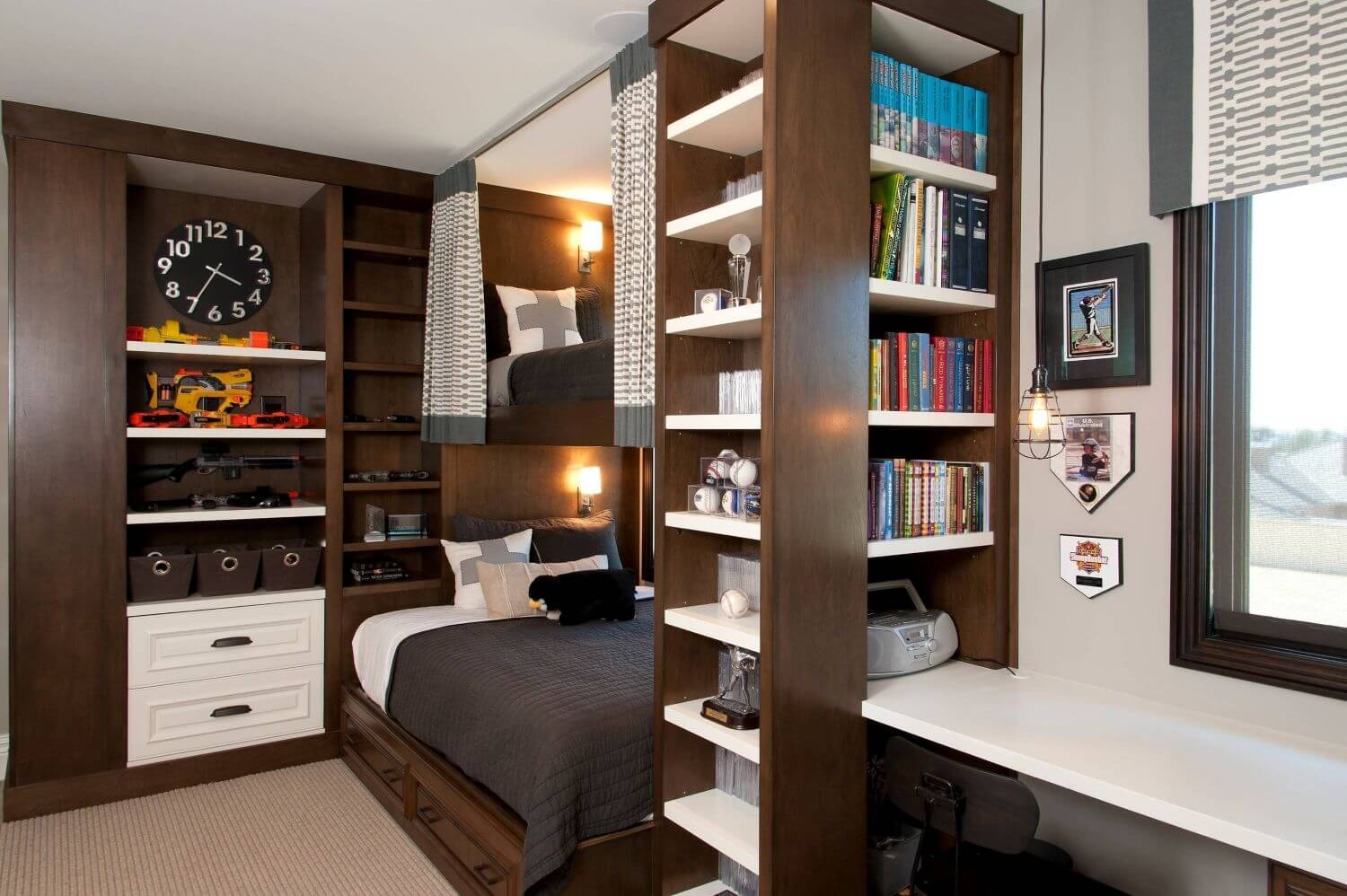
Image Credit: Robeson Design
Creating the perfect boys bedroom requires balancing immediate needs with long-term flexibility, personal expression with practical function, and individual preferences with budget realities. The most successful boys room ideas focus on creating adaptable foundations that can evolve as your son grows and his interests change.
Remember that the ultimate goal isn’t perfection, it’s creating a space where your child feels comfortable, confident, and inspired. Whether you’re working with a spacious room or a tiny space, unlimited budget or careful savings, the key lies in thoughtful planning and smart choices that prioritise function alongside style.
Start with one area, perhaps updating storage solutions or refreshing the colour scheme, and build from there. The best boys bedrooms evolve over time, growing and changing just like the children who call them home. With these foundational principles and practical ideas, you’re equipped to create a space that will serve your family well for years to come.
If you enjoyed these ideas, check out our Toddler Boy Room Ideas and Boys Bedroom Ideas For Small Rooms


